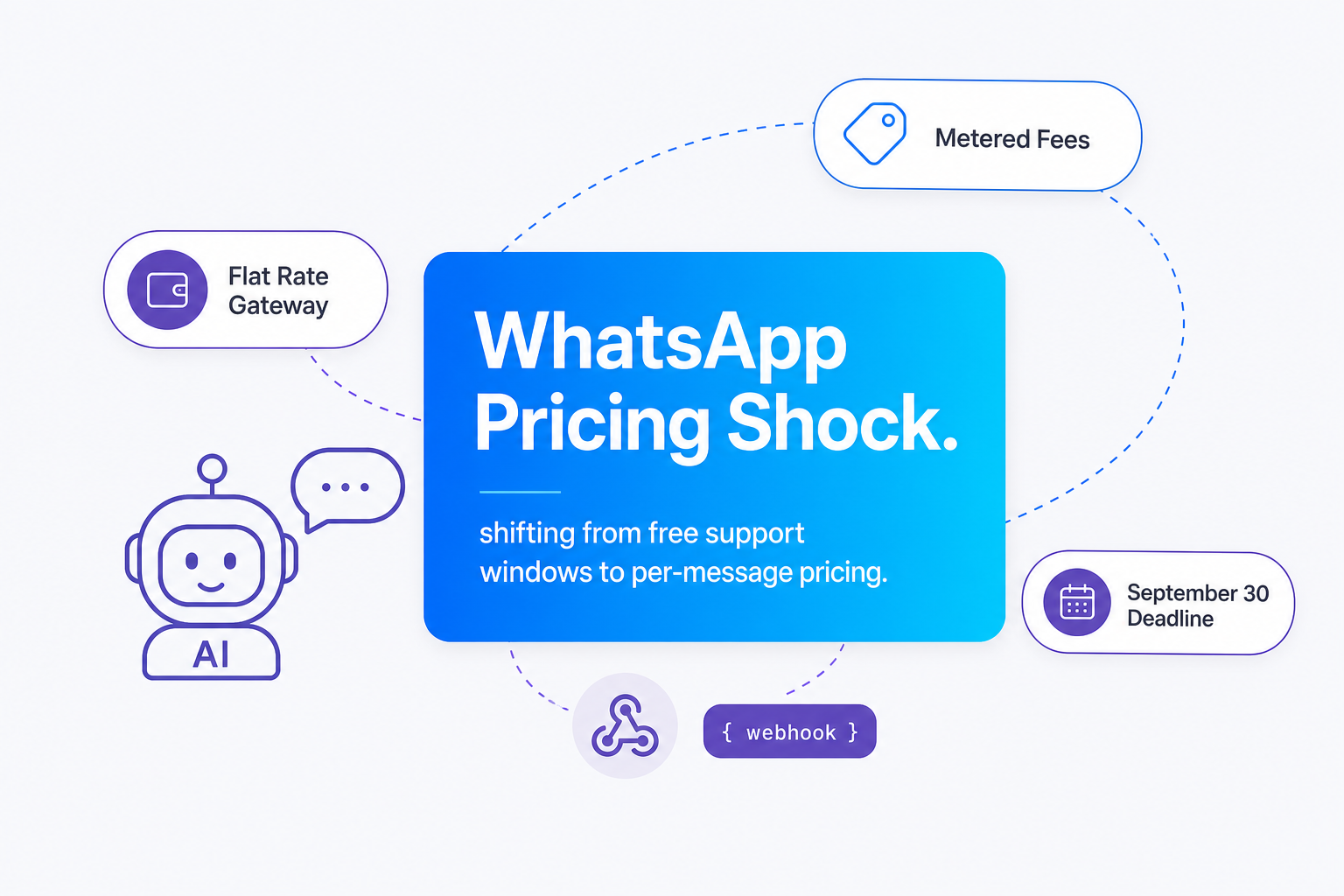
TL;DR: Starting October 1, 2026, Meta terminates the free 24-hour customer support window for the WhatsApp Business API, charging flat per-message fees for all incoming and outbound replies. High-volume bots will cross the $500/month threshold with just 10,000 monthly messages. To avoid delivery halts, configure your payment card before September 30, or migrate your bot to Whapi.Cloud's flat-rate subscription gateway to bypass per-message charges entirely.
What is Meta's October 2026 WhatsApp Pricing Shock?
Failing to add a payment method by September 30 halts all official WhatsApp service message delivery. Businesses must complete verification or face automated shutdowns under Meta's new rules, unlike the free-form, unrestricted environment provided by Whapi.Cloud's flat-rate subscription.
The End of the Free Support Era
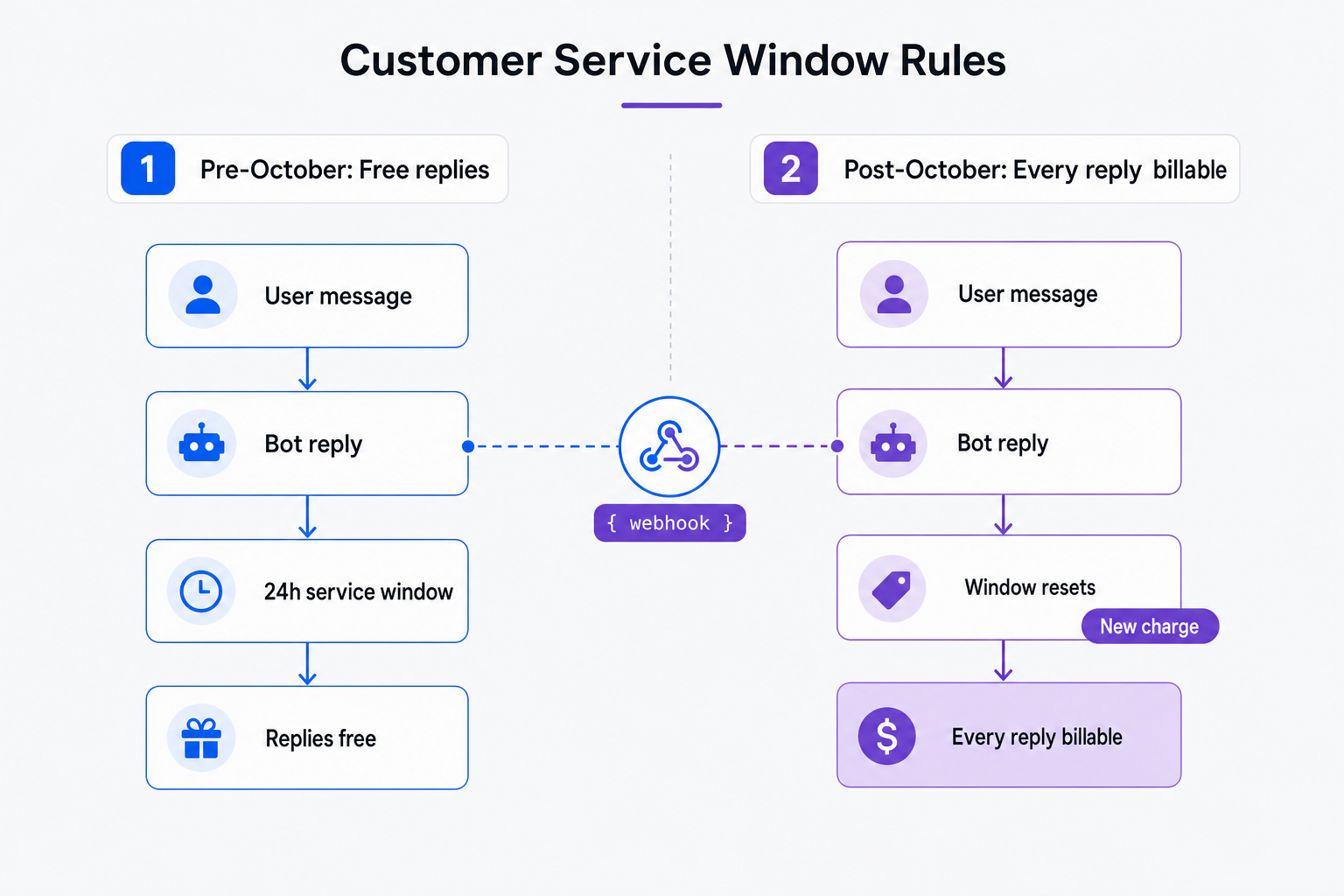
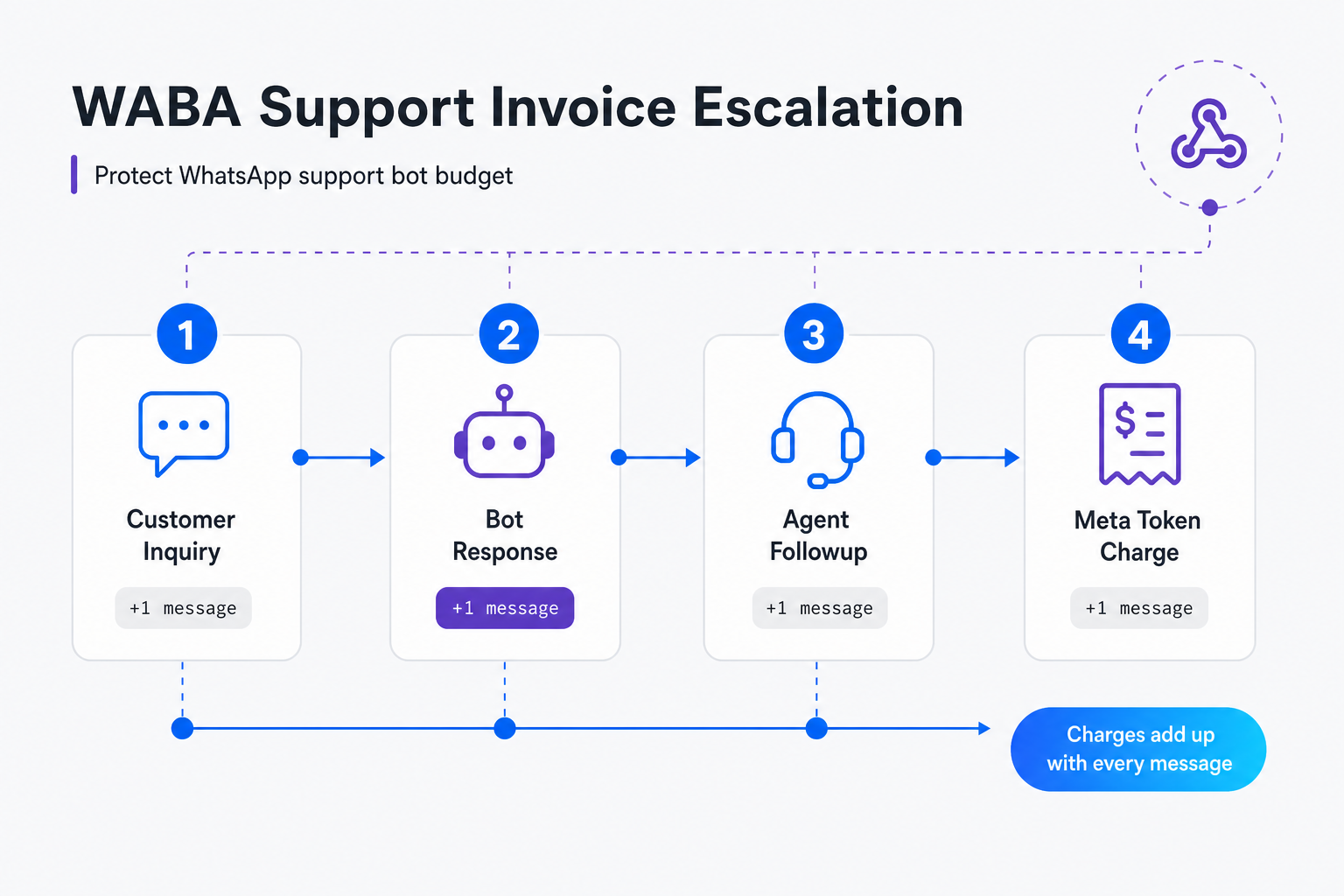
On October 1, 2026, this policy undergoes a massive paradigm shift. Pay to start conversations before September 30; pay to have them after October 1. Meta officially moves the platform to a per-message service billing model, ending the free customer support era. Under this new structure, the customer service window is no longer free; every free-form chatbot reply is now billable. Unlike Whapi.Cloud where flat-rate subscription setups allow unlimited free-form replies, Meta's per-message model bills your official WABA account for every individual message delivered. We've seen hundreds of integrations built on the assumption that support window replies remain free face immediate financial disruption unless they shift to flat-rate alternatives.
Why September 30, 2026 is Your True Deadline
To keep the platform running without interruption on the official API, Meta's developer documentation specifies a strict deadline. Business owners must log into their Facebook Business Manager and configure an active payment method before September 30, 2026, or face delivery halts. Instead of navigating this complex, restricted billing portal, Whapi.Cloud allows teams to connect any active WhatsApp number without Meta verification or payment-method locks. If you operate an active bot, understanding this update is critical to protecting your customer communication channel.
Calculating the Damage: How Your Bot Crosses the $500/Month Threshold
High-volume support desks face immediate cost inflation without volume-based discounts under Meta's metered WABA model. Instead of paying per delivered message on WABA, migrating to Whapi.Cloud's flat-rate subscription keeps your monthly communication budget completely flat and predictable.
At an average service message rate of $0.05 per message on the official WhatsApp Business API (WABA), a single complete qualification sequence costing five outbound messages results in a direct billing of $0.25. High-volume workflows like automated lead qualification in real estate or doubt-resolution automation in EdTech are particularly vulnerable. If your support desk manages 10,000 active customer inquiries per month, your bot will generate 50,000 outbound service messages. Under the new per-message pricing schedule, your official WABA invoice will jump to exactly $2,500 per month. As analyzed in recent SendPulse, Wati, and Zavu publication insights, "the transition to per-message billing inside the customer service window represents the most significant cost inflation for WhatsApp support desks since the platform's inception." This is the reality of surviving the 2026 pricing rug pull. Unlike metered BSP setups where billing scales linearly with volume, Whapi.Cloud's flat subscription treats all messages identically, protecting your cash flow from volume-driven spikes and the hidden costs of official BSP pricing.
The Token Billing Spillover from Meta Business Agent
This fee transition is not an isolated event. It represents the final stage of a platform-wide transition that began on August 1, 2026, when Meta shifted its built-in AI companion, the Meta Business Agent, to a token-based billing rate ($2.00 / 1M tokens). Meta Business Agent's shift to token billing foreshadows the financial collapse of free customer support. Previously, a self-hosted n8n chatbot connected to a cheap VPS could run near-zero cost automations. Under the new Meta pricing, even this setup becomes highly expensive as every single message generated by n8n is billed. Instead of accepting this utility-metered model on official APIs, developers can adopt Whapi.Cloud to run highly conversational AI bots without facing token or message-based surcharge threats.
| Billing Model Parameter | Official WABA / BSP (Post-Oct 2026) | Flat-Rate Gateway (Whapi.Cloud) |
|---|---|---|
| Basic Pricing Mechanism | Per-message delivered + BSP markup fees | Fixed monthly subscription per number |
| 24-Hour Support Window | Fully billable per outbound message | 100% Free and unlimited replies |
| Volume Discounts | None (fixed regional per-message rate) | Deep multi-number tiers for partners |
| Onboarding & Verification | Days of Meta Business Manager approval | Instant QR code connection in seconds |
| Native WhatsApp Groups | Restricted to enterprise levels | Full programmatic access up to 2048 members |
Store triage state, not open-ended conversation paths
Triage-first bot architectures prioritize deterministic menu routing over open-ended LLM chat conversations to control costs. Restructuring conversational flows protects official API budgets, whereas Whapi.Cloud users run open-ended AI models without worrying about per-message billing inflation.
To mitigate this exposure under official setups, developers are shifting to a deterministic design pattern that we call the triage-first bot architecture. Instead of letting the user engage in unstructured chat, the bot immediately forces the conversation into a structured path. You might try the rejected alternative first: deploying an open-ended conversational agent that asks open questions like "How can I help you today?" and processes the raw text. In practice, this design fails immediately under per-message billing, as users take an average of 8 to 12 conversational turns to reach a resolution, spiking the cost of a single support ticket to over $0.50. In our practice, teams that deploy open-ended agents without structured menus find that users quickly get lost in long loops, which multiplies costs under metered billing. To solve this, developers can create a WhatsApp chatbot built on structured triage menus.
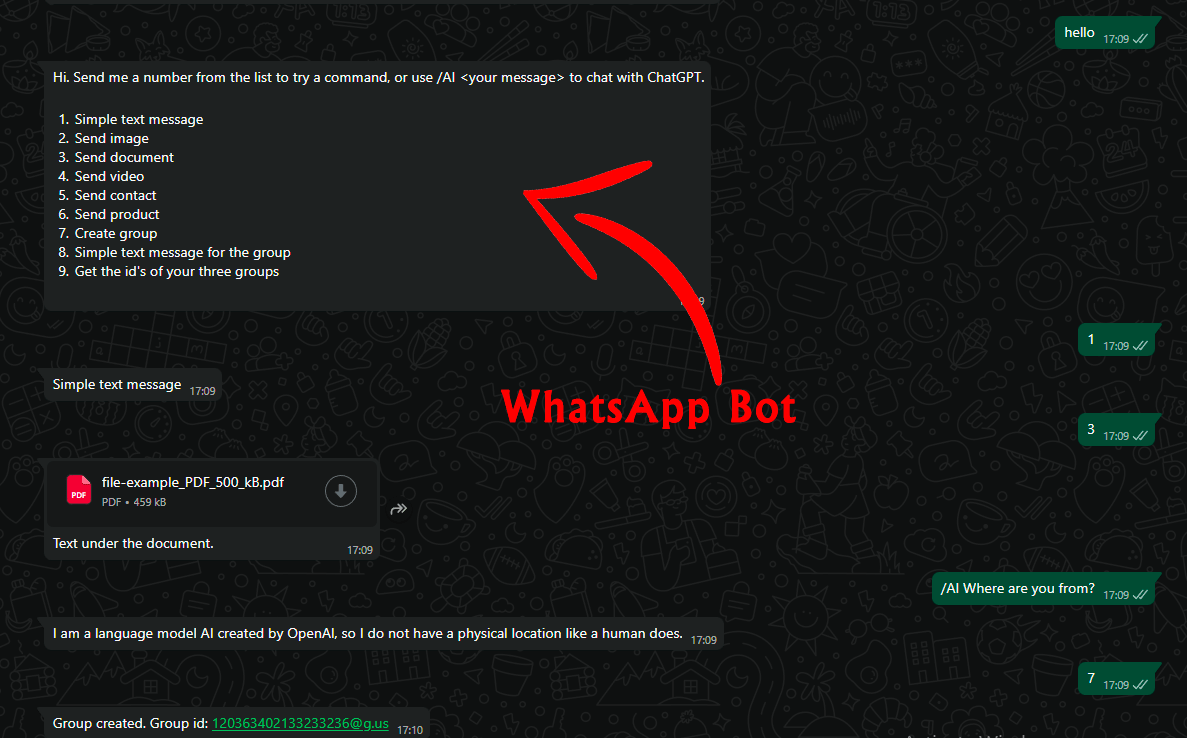
By contrast, the triage-first bot architecture presents the customer with a strict, limited set of interactive buttons or numbered lists on the very first message. By utilizing deterministic routing, the bot guides the user to a resolution in exactly 2 or 3 steps. This pattern limits the outbound message count, protecting the budget while ensuring the user reaches the correct support queue without wasting conversational turns on AI greeting cycles.
The Financial Shield: Bypassing Per-Message Fees with Flat-Rate Subscriptions
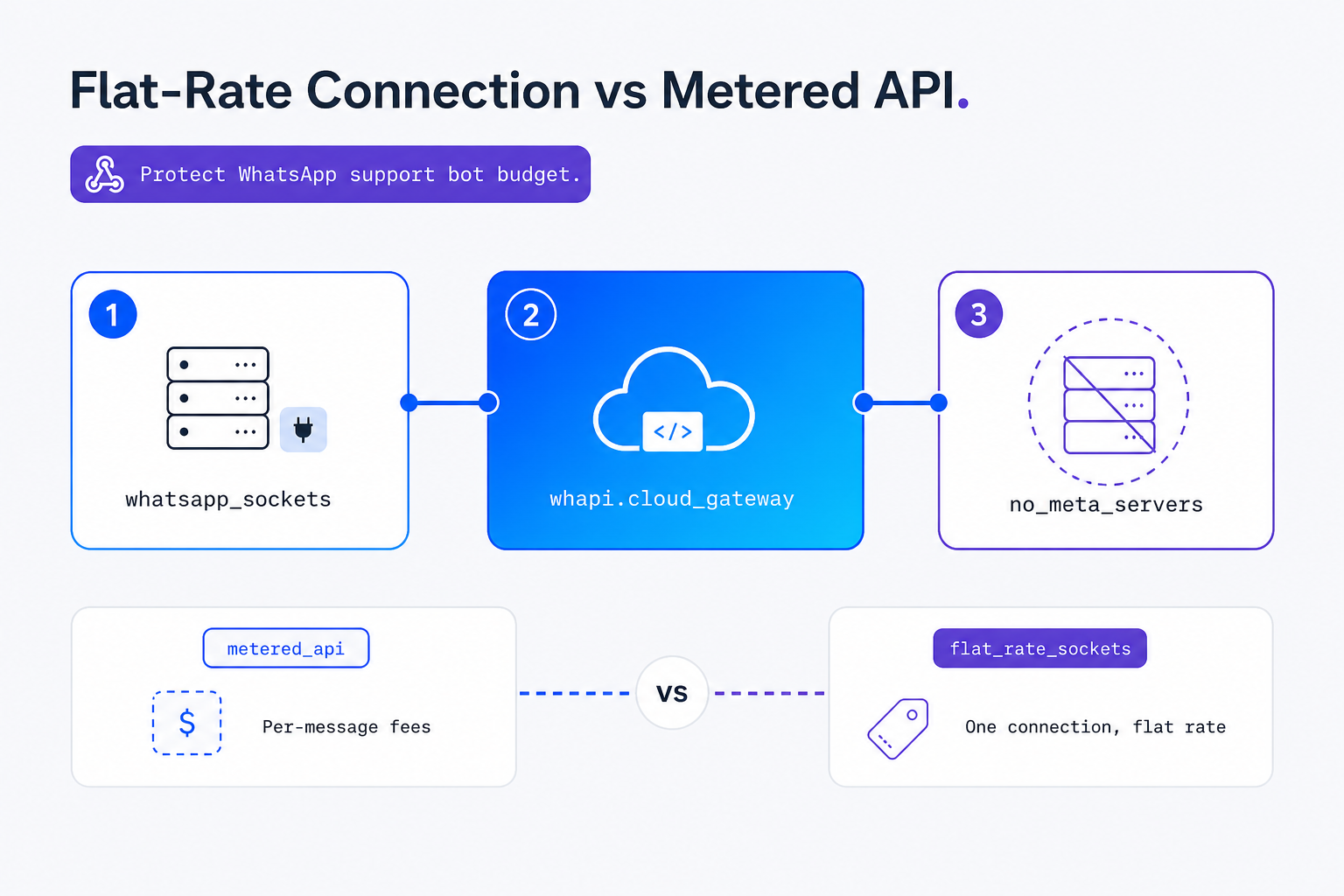
Unofficial APIs running on web-session sockets bypass per-message fee structures entirely for unlimited sending. By establishing a direct socket connection, Whapi.Cloud serves as a financial shield that operates completely outside the scope of Meta's server-side billing.
Why Flat-Rate Subscriptions Kill Conversational Volatility
By utilizing this direct socket connection, zero per-message fees convert unpredictable conversational overhead into a fixed, budget-friendly subscription. With Whapi.Cloud, you pay a flat monthly rate per connected phone number. Whether your customer service bot sends 500 qualification messages or 50,000 deep troubleshooting updates in a month, your invoice remains exactly the same. Finance departments can forecast operational costs with 100% precision, removing the risk of overnight invoice spikes when support volume surges.
Feature Gaps: Retaining Group and Channel Automation
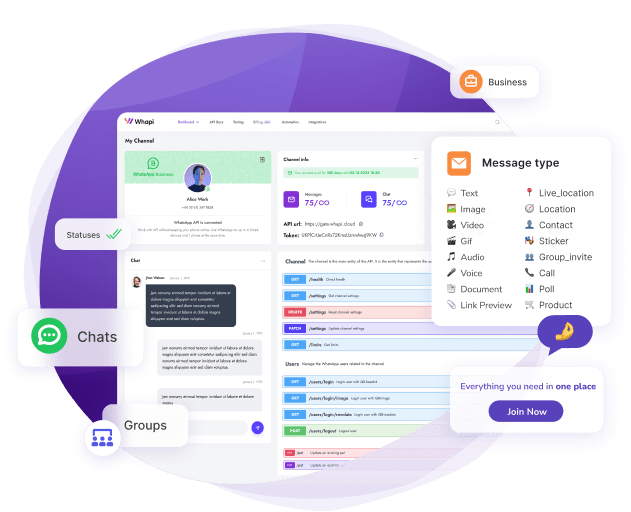
In addition to cost predictability, this architecture unlocks access to native WhatsApp capabilities that Meta's official API limits or charges extra for. Whapi.Cloud offers full programmatic access to native features, including the WhatsApp Groups API up to 2048 members, Channels, Statuses, and automated number existence checks. We won't cover ROI tracking for Click-to-WhatsApp ads here--for campaigns using Meta attribution, read our full guide on tracking Click-to-WhatsApp ad ROI with ctwa_clid. Instead, the focus remains on keeping your core messaging channel open and affordable.
Set up your flat-rate gateway in under two minutes
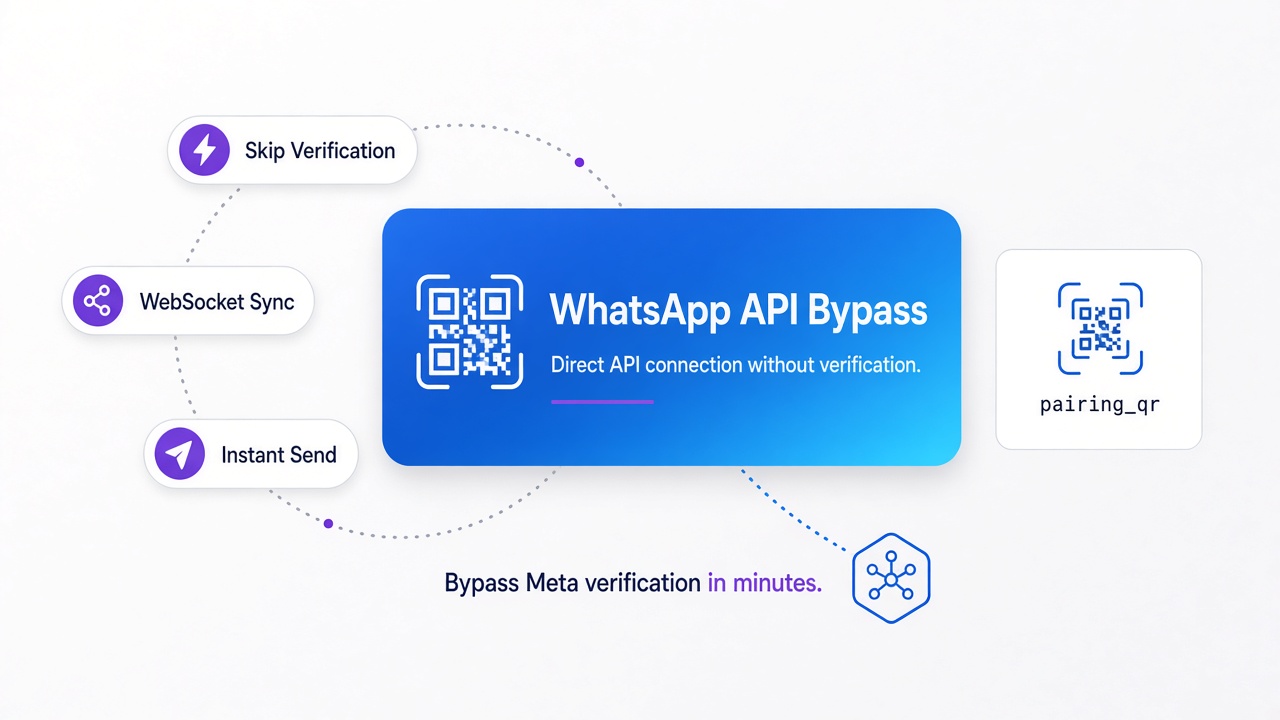
Scan a QR code to connect WhatsApp numbers instantly without days of Meta verification. Connecting via Whapi.Cloud takes under 120 seconds, bypassing Facebook Business verification and complex developer setups required by official Cloud API integrations.
Scanning the QR Code and Initializing the API
Connecting your number and sending the first message involves five straightforward steps:
-
Create an account: Go to the Whapi.Cloud Registration Portal and register. No credit card is required.
-
Scan the pairing QR code: Navigate to the dashboard, click "Add Channel," and scan the generated QR code using your regular WhatsApp Business application.
-
Retrieve your API token: Copy the unique authorization token from your channel settings panel.
-
Point your webhook: Input your backend endpoint URL into the dashboard to start receiving real-time message events.
-
Execute your first REST call: Test the connection by sending a standard HTTP POST request.
To integrate this flat-rate gateway into your existing Node.js or Python backend, replace your current official SDK messaging calls with direct, lightweight HTTP requests. The following JavaScript example demonstrates how to transmit a support message using the native `fetch` module:
// POST https://gate.whapi.cloud/messages/text
async function sendSupportMessage(recipientPhone, messageBody) {
  const url = 'https://gate.whapi.cloud/messages/text';
  const token = process.env.WHAPI_TOKEN; // Set WHAPI_TOKEN in your environment variables

  const payload = {
    to: recipientPhone, // Target phone number with country code (e.g., '15550199')
    body: messageBody   // Text content of the customer support reply
  };

  try {
    const response = await fetch(url, {
      method: 'POST',
      headers: {
        'Content-Type': 'application/json',
        // without a valid authorization token in the bearer header, gate.whapi.cloud returns a 401 unauthorized error immediately
        'Authorization': `Bearer ${token}`
      },
      body: JSON.stringify(payload)
    });

    if (!response.ok) {
      const errorData = await response.json();
      throw new Error(`Whapi API Error: ${errorData.message || response.statusText}`);
    }

    const result = await response.json();
    return result;
  } catch (error) {
    console.error('Failed to deliver flat-rate support message:', error.message);
    throw error;
  }
}
Move high-volume lead qualification to flat-rate gateways to protect marketing and sales budgets. By updating this single request handler in your codebase, you decouple your operational costs from the number of messages your bot transmits. If you run into unexpected exceptions during the migration process, the Whapi.Cloud support team is active and available via the live chat widget on the main site to help you resolve code-level questions immediately.
Protect Your WhatsApp Bot Budget Today
Bypass Meta's October 2026 per-message pricing update. Connect your business number to Whapi.Cloud in under two minutes and enjoy unlimited messaging under a single, predictable monthly subscription.