TL;DR: Meta's shift from a 24-hour conversation bundle to per-message pricing breaks multi-step workflows. Whapi.Cloud provides a flat-rate alternative to Meta's expensive official API. Migrate to a flat-rate unofficial API like Whapi.Cloud to cap your costs at $12-$35/month regardless of message volume.
Meta's WhatsApp API pricing shift acts as a "rug pull" for developers. As one HackerNews user described it: "This feels like Whatsapp (Meta) is rug pulling the users once everyone has moved to Whatsapp, almost analogous to what Uber did. Drive Taxis out of business with predatory pricing, and then increase the prices."
When the platform was growing, the pricing model encouraged complex, multi-step bots. You paid once for a 24-hour conversation window, and your bot could exchange dozens of messages with the user for free. That era is over. The new billing structure penalizes engagement, turning every automated nudge and transactional update into a separate line item on your invoice.
For enterprise brands with massive margins, this is an annoyance. For startups, SMBs, and independent developers, it is an existential threat to their messaging strategy. If your product relies on WhatsApp for onboarding, alerts, or customer support, you have to restructure your architecture or find a new provider.
Why the 24-Hour Bundle Died
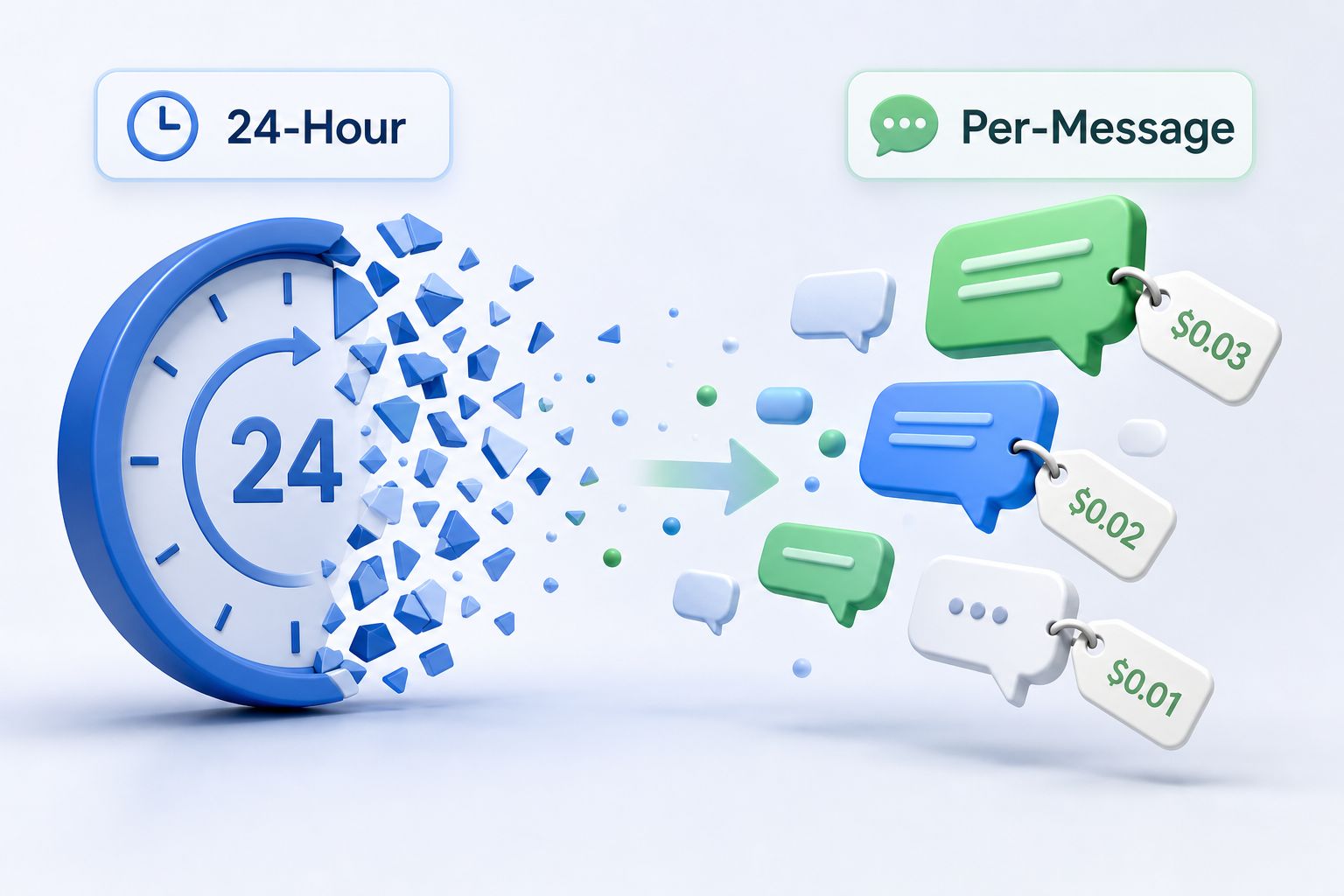
The 24-hour conversation bundle is dead, replaced by punitive per-message fees. Meta realized that businesses were packing too much value into the session window, and shifted models to capture revenue on every interaction.
In the official WhatsApp Business API, you now pay per-message fees categorized by utility, marketing, and authentication. In Whapi.Cloud, you pay a flat monthly subscription for the number, so you can send as many messages as you need in a session without triggering new charges. This works because the connection uses web-session sockets rather than Meta's metered cloud infrastructure.
The mechanism is simple: Meta charges for the exact volume of messages delivered, categorized by template type. Business Solution Providers (BSPs) like Twilio or MessageBird pass these costs along, often adding their own markup per message. The result is a highly volatile billing environment where a successful marketing campaign or an active customer support day actively punishes your profit margins.
The overhead of managing template approvals combined with unpredictable costs makes the official route unviable for bootstrapped projects. We've seen freelance developers and agencies building lead-notification bots completely abandon the official API. When a simple bot pushing web form leads to a client's WhatsApp incurs high fees for basic utility messages, the agency cannot profitably monetize the service.
How Per-Message Billing Breaks SaaS Economics
The new pricing model actively breaks the business logic of standard e-commerce and SaaS workflows.
Consider a standard e-commerce transactional flow. Previously, a store could send an order confirmation, a shipping update, and a review request within 24 hours, paying for a single conversation. Under the new model, multi-step e-commerce workflows now multiply costs linearly instead of being grouped. That exact same customer journey triggers three separate utility message charges. The operational cost of fulfilling an order multiplies linearly with the quality of your customer communication.
SaaS platforms face an even steeper penalty. A B2B application sending five marketing nudges per active user per month previously paid for one conversation session. Now, it pays for five separate marketing messages. Predictable pricing is essential for SaaS companies relying on WhatsApp marketing nudges. When your user base scales to thousands of accounts, this linear cost multiplication destroys the unit economics of your notification system.
The $770 Reality Check: Official API vs. Flat-Rate
To understand the scale of the problem, you have to run the numbers on a typical mid-sized deployment.
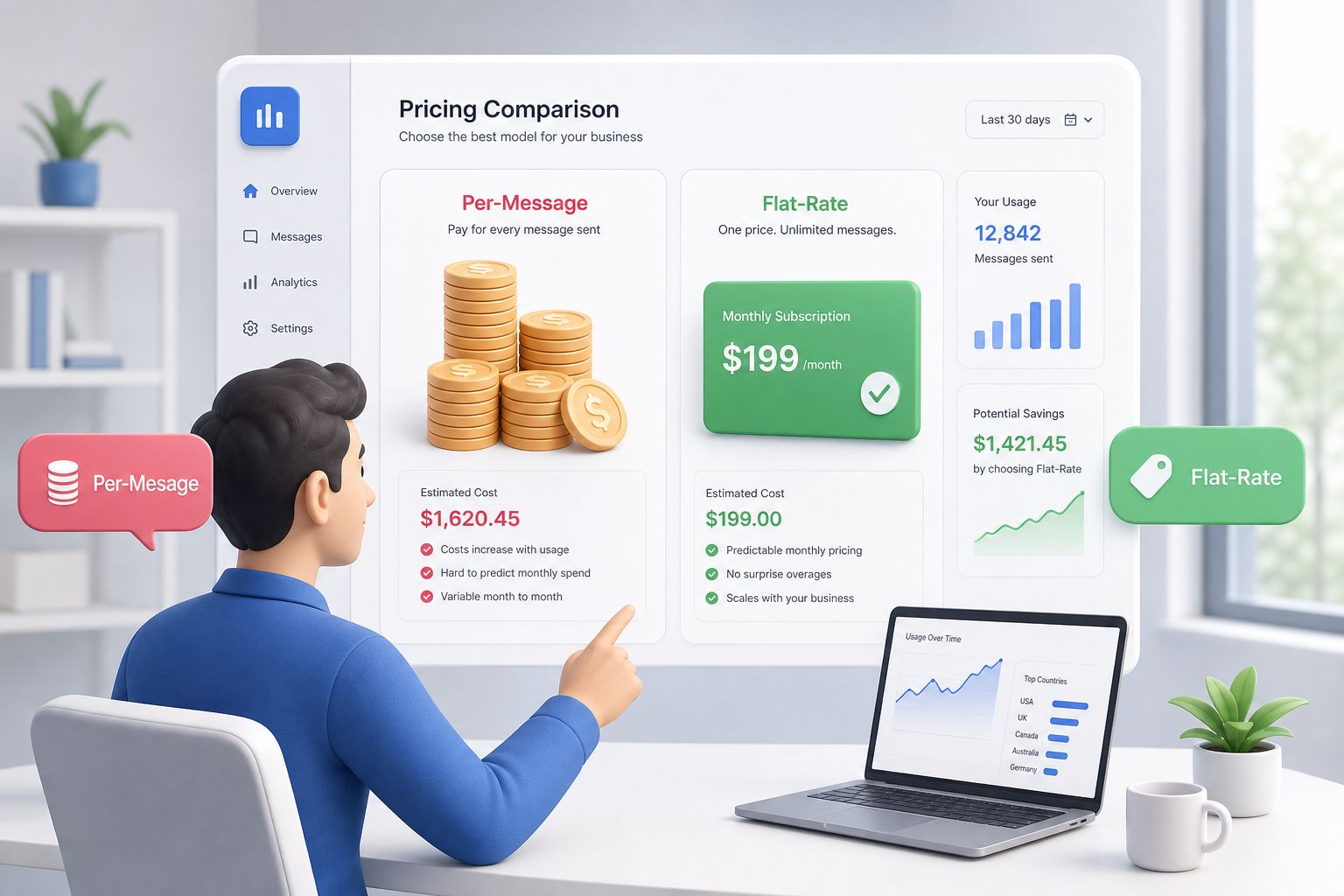
The math is brutal: Sending 50,000 monthly messages can now cost SMBs over $770 monthly. That is nearly $10,000 a year just for the privilege of talking to your own customers. In contrast, Whapi.Cloud's flat-rate pricing shields you from these volume-based penalties.
| Metric | Official API (via BSP) | Whapi.Cloud (Flat-Rate) |
|---|---|---|
| Pricing Model | Per-message + BSP markup | Flat monthly subscription |
| 50k Messages Cost | ~$770 / month | $12-$35 / month |
| Message Templates | Mandatory, pre-approved | Not required |
| Multi-step Bots | Cost multiplies per step | Included in flat rate |
At high volumes, the pricing model matters as much as reliability. Whapi.Cloud's per-number flat rate means a campaign sending 50,000 messages costs the same as one sending 500. The budget stays predictable regardless of how active a conversation thread becomes.
Why Developers Are Migrating to Unofficial APIs
Unofficial APIs offer predictable flat-rate subscriptions instead of unbounded usage fees. Developers are migrating en masse to QR-linked APIs to regain control over their economics.
In the official WhatsApp Business Platform, sending outbound notifications requires pre-approved message templates, which are strictly categorized and billed accordingly. In Whapi.Cloud, you do not need message templates or Meta approval to send outbound text. The platform operates a standard WhatsApp account programmatically, bypassing the template gating system entirely.
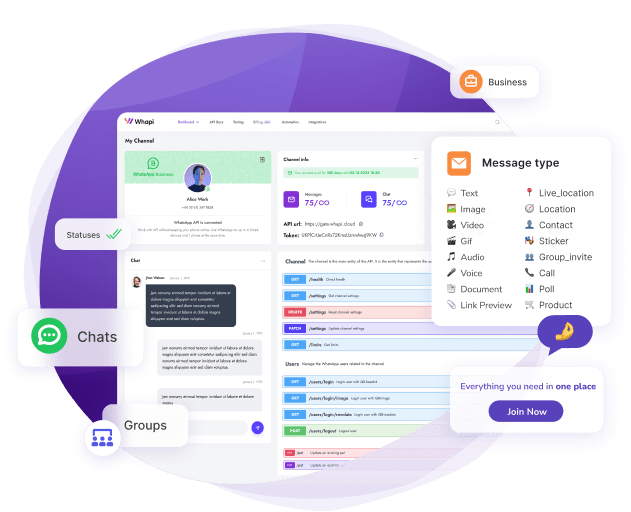
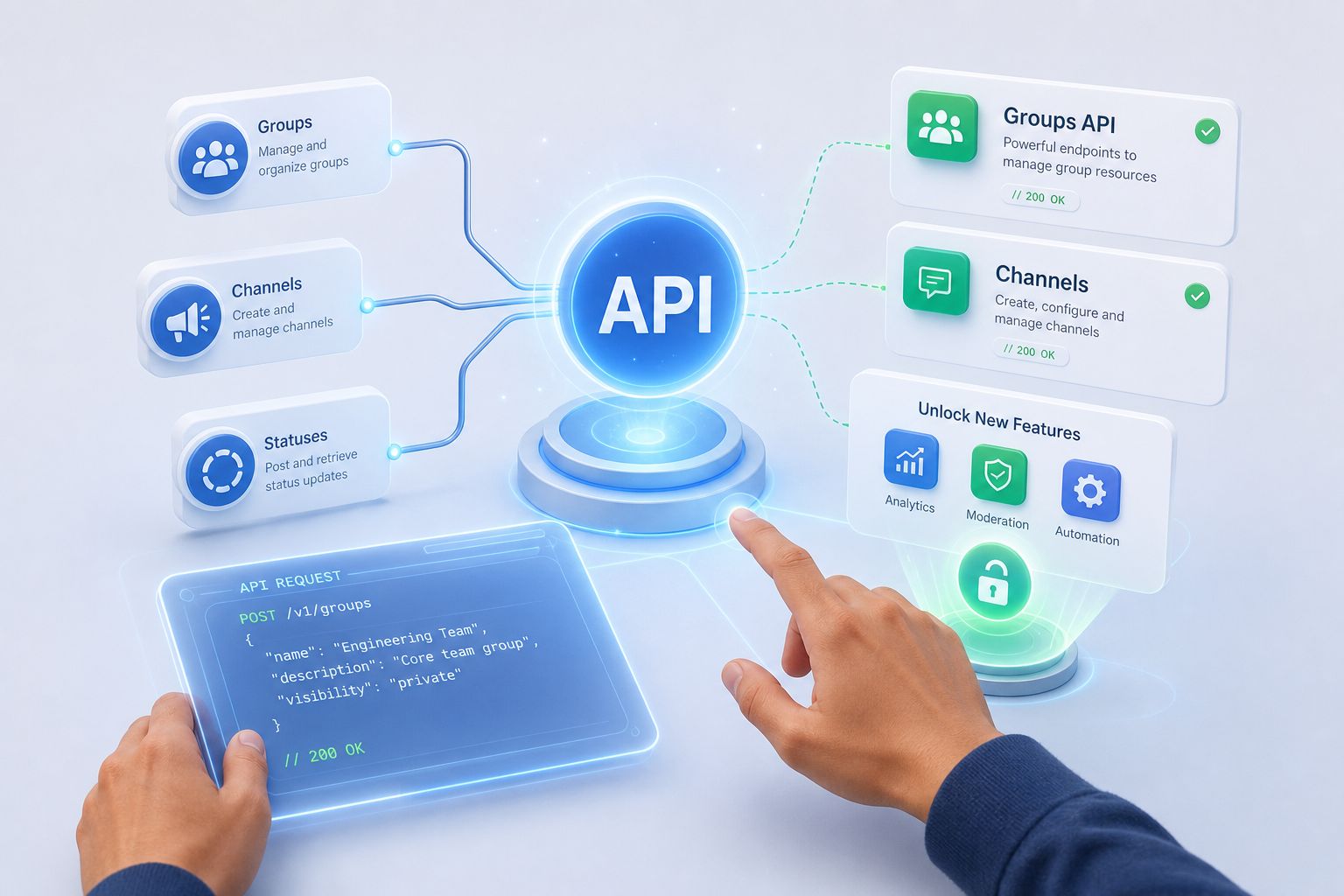
This migration goes beyond cost. It is about capability. Official APIs restrict access to native WhatsApp features to prevent spam. Unofficial gateways restore that access. Whapi.Cloud provides full programmatic control over WhatsApp Groups, Communities, Channels, and Statuses. If you are building a community management tool or a broadcast network, the official API simply does not offer the endpoints you need.
In practice, teams use these features to build entirely new product categories. An agency can deploy an inbound bot that listens to a specific WhatsApp Group, processes queries via an LLM, and responds in the thread. Doing this on the official API is either impossible due to group size limits or prohibitively expensive due to per-message billing.
The Technical Reality of Unofficial Gateways
Not all unofficial APIs are built the same. Bots on browser-emulation layers drop sessions constantly. Whapi.Cloud connects through stable web-session sockets, eliminating the brittle browser layer entirely and surviving long-running deployments.
When you evaluate alternatives like Evolution API or SendAPI, you must factor in the operational tax of self-hosting. Open-source libraries break unexpectedly when WhatsApp updates its protocol, leaving you to absorb the churn and scramble for patches. Whapi.Cloud absorbs these protocol changes upstream, keeping the customer-facing API completely stable. This managed infrastructure approach removes the need for your team to provision proxy farms, manage credential rotation, or debug brittle session restores. You get the flat-rate economics of an unofficial API with the reliability of a managed cloud service.
Managing the Ban Risk
Operating outside the official Meta infrastructure introduces the risk of account suspension if the number exhibits spam-like behavior.
Accounts get banned when they send unsolicited bulk messages. Features like inbound bots and communities mitigate ban risks of unofficial APIs. Over 3,000 active clients use Whapi.Cloud in production daily by focusing on high-value transactional alerts rather than cold outreach. For a deeper dive, see our guide on how to avoid WhatsApp bans.
The most effective strategy is to leverage WhatsApp Communities and Groups. Instead of blasting 1,000 individual direct messages, you broadcast to a single Channel or Community announcement group. This drastically reduces the outbound message count, eliminates the spam-report vector from individual chats, and keeps the account's health score pristine.
Many teams adopt a hybrid architecture to balance risk and cost. They use an official API provider for the initial compliant outbound contact, and then transition the user into a Whapi.Cloud-managed group or community for ongoing, flat-rate interactions. This pattern provides the compliance of the official route with the flat-rate economics of the unofficial gateway.
Stop Paying Per Message
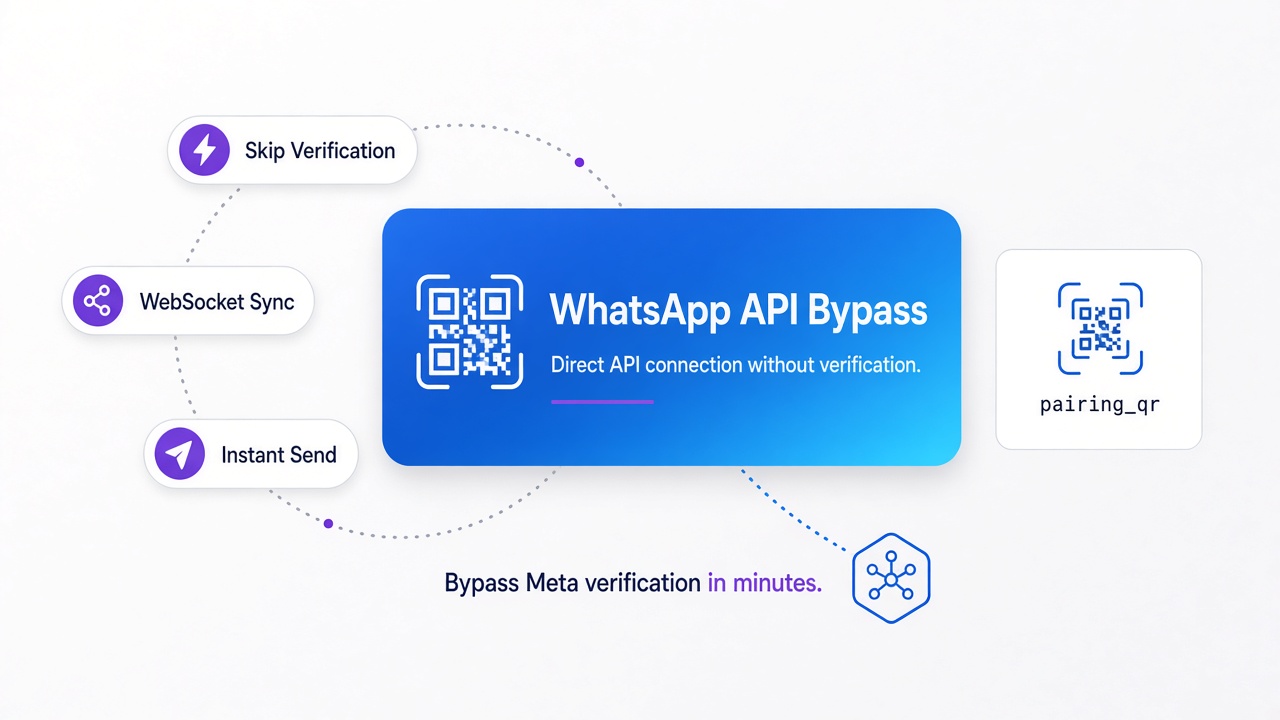
Startups are abandoning official BSPs due to restrictive, expensive message templates. Flat-rate QR-linked APIs are the new standard for cost-effective WhatsApp automation. If Meta's pricing broke your bot's economics, connect your number via QR code for a predictable subscription.