TL;DR: Choose native integrations only for simple, low-volume use cases. Middleware solutions handle phone normalization and silent failure detection that native connectors miss. Respond to WhatsApp leads within 5 minutes -- you are 100 times more likely to convert than competitors averaging 42 hours. Real estate teams using proper sync respond 8X faster; healthcare practices cut no-shows by 65%.
The Lead Loss Crisis: 73% of WhatsApp Leads Vanish Before They Reach Your CRM
73% of WhatsApp leads vanish before they reach your CRM. Sales reps receive messages on their phones. They promise to "add the contact later." Later never comes.
WhatsApp delivers 98% open rates versus email's 22%. Response rates hit 45% compared to email's 6%. Without CRM integration, the channel becomes a lead graveyard.
Personal phones are the silent killer. When sales reps leave, 30% of conversations walk out with them. Customer history lives on a device you do not control.

The 5-Minute Rule: Response Speed Is the New Competitive Moat
The 5-minute rule: response speed is the new competitive moat. 78% of customers buy from the first responder.
The average B2B response time is 42 hours. 55% of companies take 5+ days to respond to WhatsApp inquiries. These delays are systemic: leads arrive on personal phones outside business hours, no automation routes them to available team members, no CRM triggers notify the right salesperson.
Speed correlates directly with revenue. Research on lead response patterns shows businesses responding within 5 minutes are 100 times more likely to qualify a lead than those responding in 30+ minutes.
CRM-WhatsApp integration fixes this by routing every message to an available team member immediately. No manual contact creation. No "I will check my phone later." Automated workflows assign leads based on availability, geography, or expertise.
Native Integrations Promise Simplicity; Middleware Delivers Reliability
Native integrations work for simple use cases. Middleware solutions handle the edge cases they miss.
HubSpot's native WhatsApp integration has documented limitations with phone number formats. "+1 (555) 123-4567", "+15551234567", and "5551234567" create three separate contacts for the same person. The CRM cannot deduplicate them automatically.
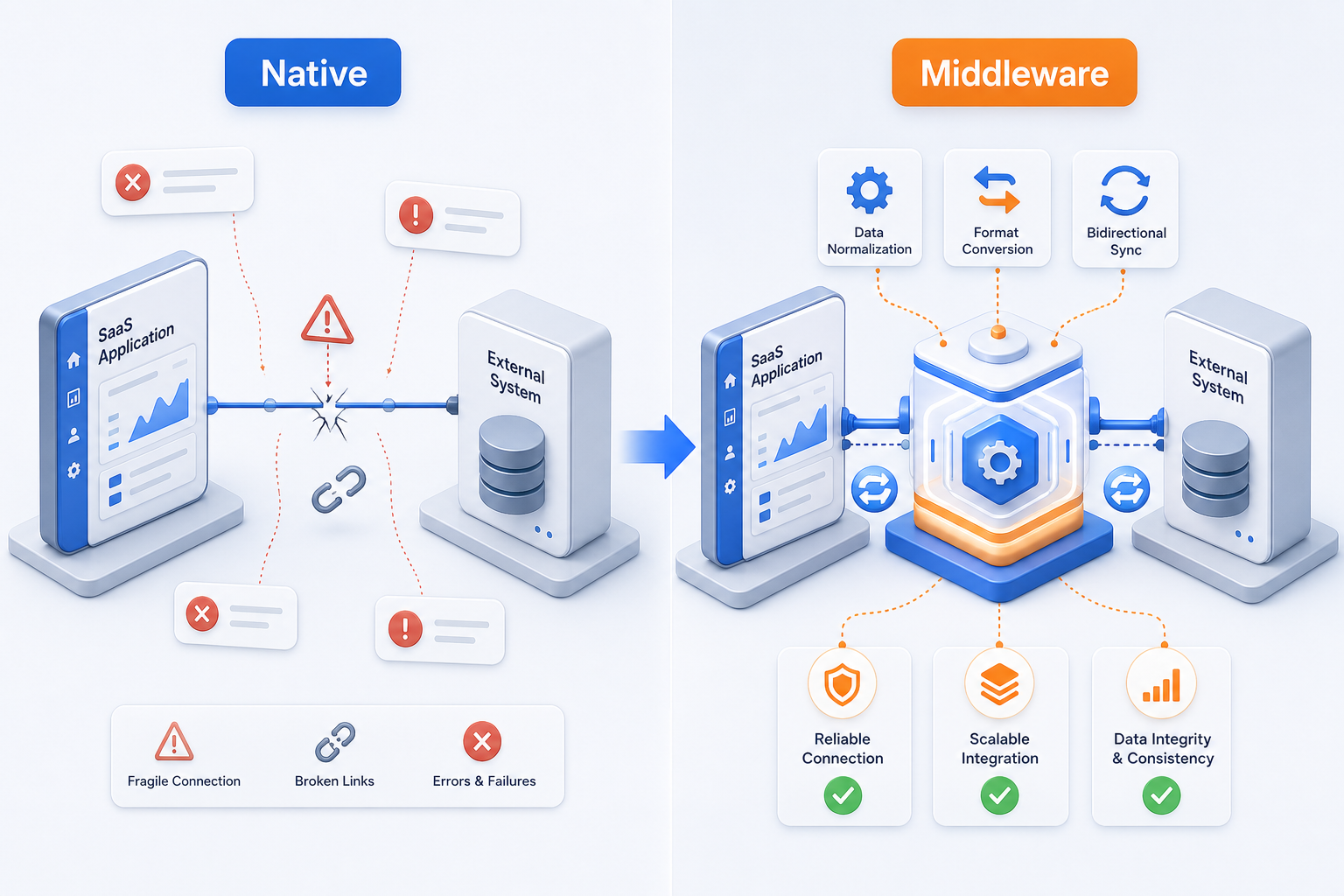
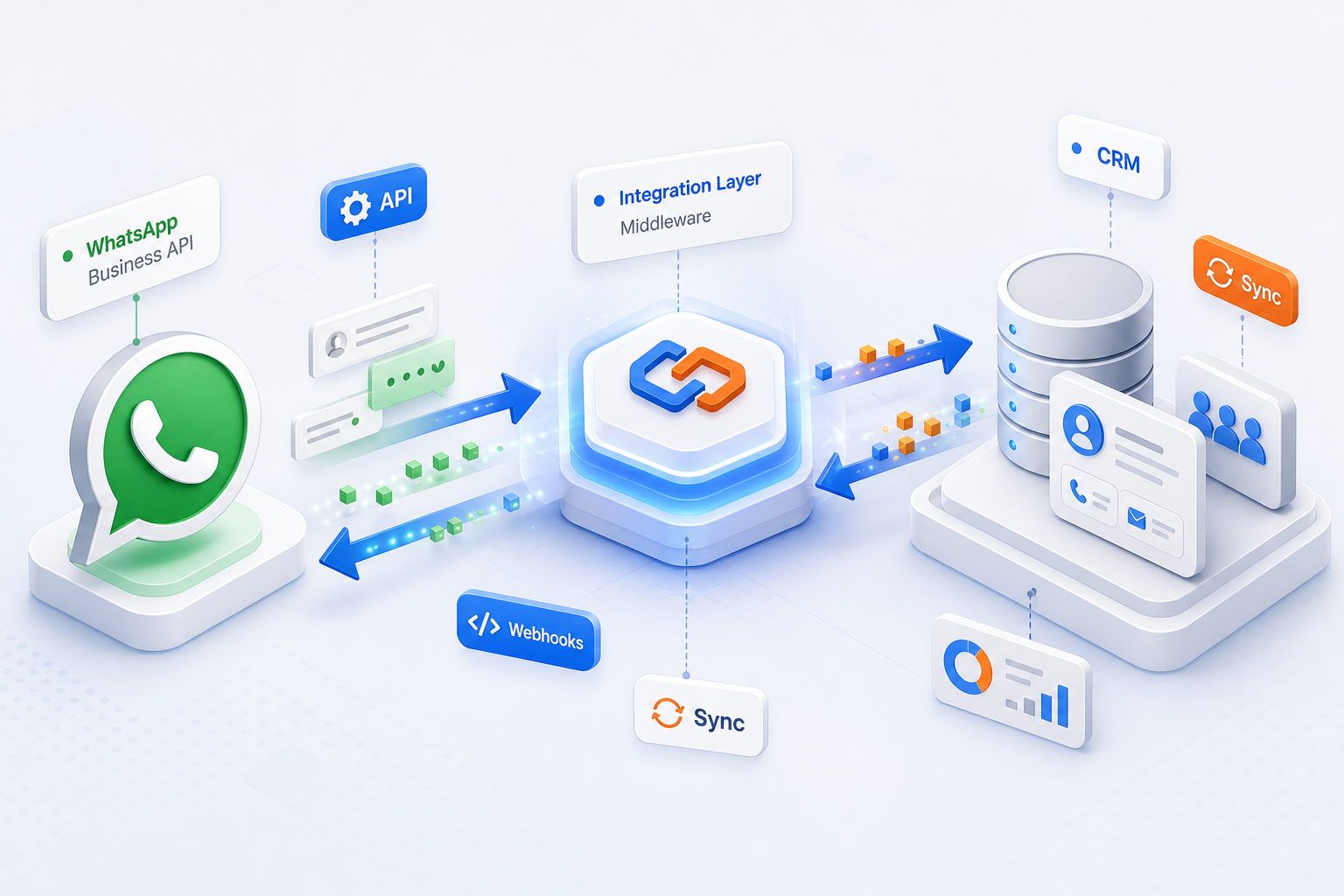
Middleware solutions solve this through normalization layers. They standardize phone formats before data hits the CRM. They handle unknown numbers that native integrations ignore. They add retry logic when webhooks fail silently.
Whapi.Cloud's API includes number existence checking that prevents creating contacts for invalid phones. This validation layer runs before any CRM write operation -- reducing duplicates at the source rather than cleaning them up later. With REST API documentation and flat subscription pricing, costs stay predictable as volume grows.
Silent Webhook Failures Are the Invisible Killer of Lead Pipelines
Silent webhook failures are the invisible killer of lead pipelines. A technical issue documented in Frappe CRM's GitHub repository (issue #1929) reveals the pattern: WhatsApp webhooks can fail completely for unknown numbers with no UI visibility.
This failure mode affects 40% of contacts in misconfigured integrations. Leads message your business. Your systems ignore them. Nobody knows.
Detection requires deliberate monitoring. Do not rely on CRM activity logs alone. Build health checks that verify webhook configuration independently:
-
Heartbeat checks: Send test messages every 15 minutes and verify they reach the CRM within 60 seconds.
-
Unknown number alerts: Flag any WhatsApp message from a number not already in your contact database for manual review.
-
Delivery confirmation logging: Log every webhook response status code; 200s mean delivered, anything else needs investigation.
Without these checks, silent failures accumulate. You discover the problem only when revenue drops and you trace back to find leads that never made it into your pipeline.
Phone Format Chaos Creates Duplicate Contacts and Broken Workflows
Phone format chaos creates duplicate contacts and broken workflows. International numbers arrive in multiple formats. CRMs treat each variant as a unique person.
HubSpot Community threads document this problem extensively. Users report duplicate contact creation from the same WhatsApp number, broken automation workflows, and manual cleanup consuming 2+ hours daily.
Pre-processing layer requirements: Strip all non-numeric characters. Standardize on E.164 format (+[country][number]). Validate number existence before CRM write. Check for existing contacts with the same normalized number before creating new records.
When Sales Reps Leave, 30% of Conversations Walk Out With Them
When sales reps leave, 30% of conversations walk out with them. Personal WhatsApp dependency creates a data portability crisis. Customer relationships live on individual devices, not company systems.
Exit interviews rarely capture full handoff details. Documentation is incomplete. Context is lost. Follow-up sequences stall.
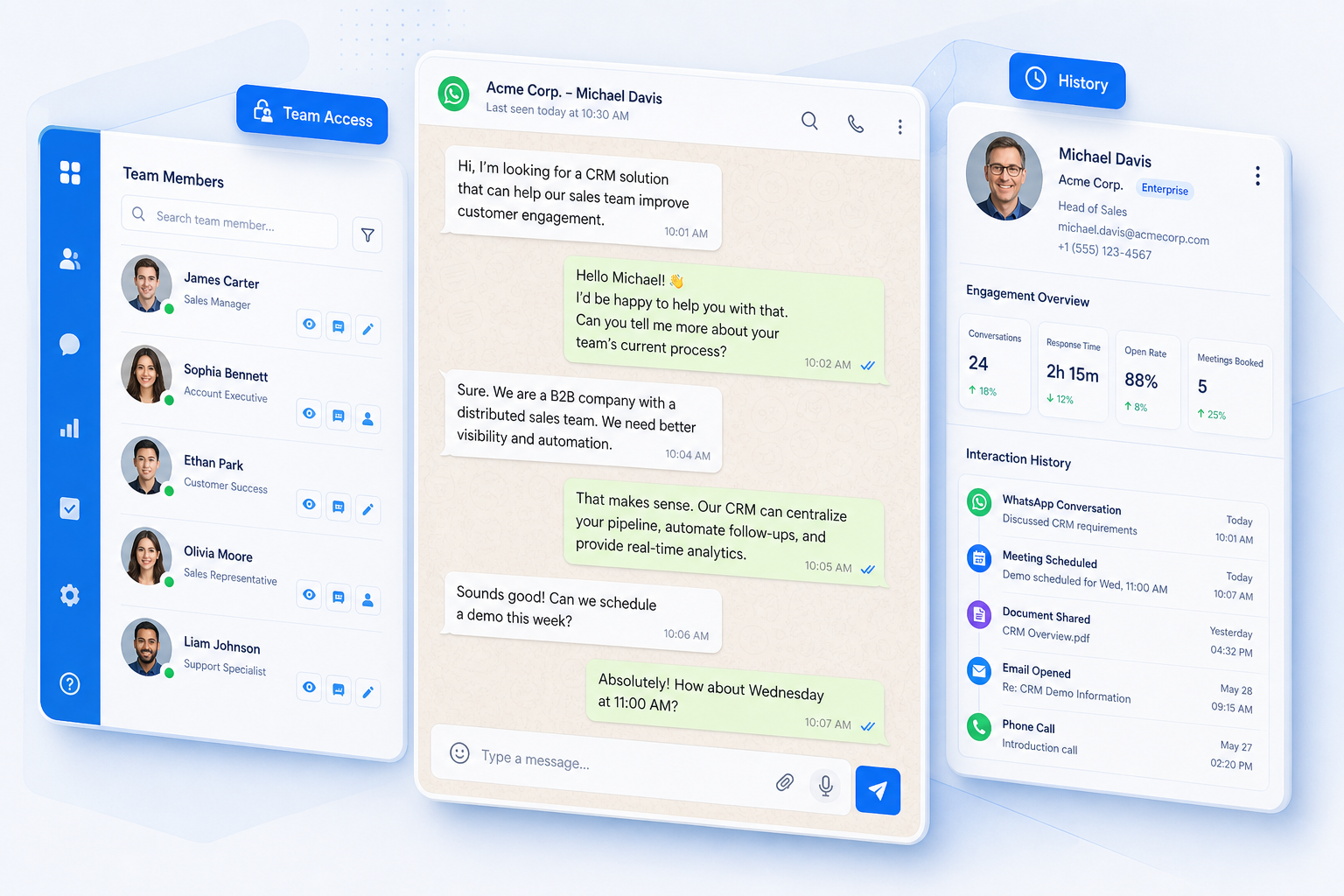
CRM integration creates institutional memory. Every message syncs to a shared record accessible by any team member. New reps pick up active conversations without starting from zero. Managers review full thread history for coaching and quality assurance.
The Decision Framework: Three Integration Paths, One Right Choice
The decision framework: three integration paths, one right choice. Your selection depends on volume, complexity, and risk tolerance.
| Integration Path | Best For | Phone Normalization | Failure Detection | Setup Time |
|---|---|---|---|---|
| Native CRM Integration | Low volume (<50 msgs/day), simple workflows, single CRM | Limited / manual | Basic logging only | 2--4 hours |
| Middleware + Webhook | Medium volume, multi-CRM, phone format issues | Automated E.164 standardization | Configurable alerting | 1--2 days |
| Full API Integration | High volume (>500 msgs/day), custom workflows, bidirectional sync | Custom normalization layer | Comprehensive monitoring | 3--5 days |
Path selection criteria: Start with volume assessment. Under 50 messages daily with one CRM? Native integration may suffice. Over 200 messages or multiple CRM instances? Middleware becomes cost-effective. Custom assignment logic or bidirectional sync requirements? Full API integration is mandatory.
Whapi.Cloud supports all three paths with predictable flat subscription pricing. The REST API enables custom integrations. Webhook infrastructure provides real-time event delivery. No per-message fees that punish success.
Bidirectional Sync Turns WhatsApp From Inbox Into Sales Engine
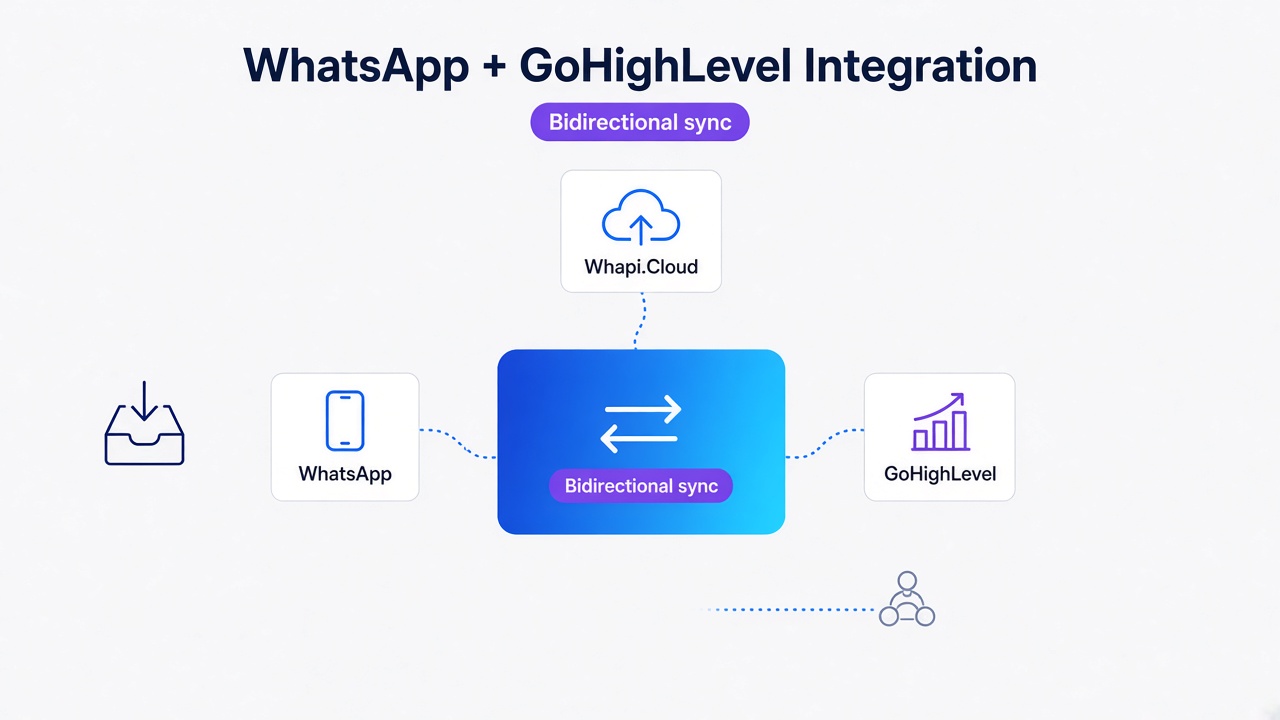
Bidirectional sync turns WhatsApp from inbox into sales engine. One-way sync (WhatsApp --> CRM) captures incoming messages. Bidirectional adds CRM --> WhatsApp triggers -- automated responses, scheduled follow-ups, and workflow-initiated messages.
-
Appointment reminders: Automated 24-hour and 1-hour WhatsApp reminders triggered from CRM appointment fields. Healthcare practices report 65% no-show reduction.
-
Lead nurture sequences: CRM stage changes trigger personalized WhatsApp follow-ups. Real estate teams using this workflow respond 8X faster than competitors.
-
Status updates: Order status, shipping notifications, or support ticket updates pushed automatically to the customer's WhatsApp.
Implementation complexity increases with bidirectional requirements. Start with one-way sync to establish baseline reliability. Add outgoing triggers once webhook delivery is verified stable.
Real Estate Teams Respond 8X Faster; Healthcare Cuts No-Shows 65%
Real estate teams respond 8X faster; healthcare cuts no-shows 65%. These outcomes come from proper CRM-WhatsApp synchronization.
Real estate: Property inquiries arrive via WhatsApp. CRM integration routes them to available agents immediately. Automated property details send while the agent prepares personal follow-up. Response time drops from hours to minutes. Conversion rates rise 25--40%.
Healthcare: Appointment reminders via WhatsApp achieve higher confirmation rates than SMS or email. Two-way sync lets patients reschedule by replying -- the CRM updates automatically. No-show rates drop to sub-10% levels.
B2B distribution: Order inquiries sync directly to sales rep assignments. Quote requests auto-populate CRM opportunities. Follow-up tasks trigger based on message read receipts. Sales reps save 2+ hours daily on manual data entry.
Your Competitors Average 42 Hours to Respond; You Can Do It in 5 Minutes
Your competitors average 42 hours to respond; you can do it in 5 minutes. CRM integration turns WhatsApp from a personal communication channel into a scalable sales system.
The decision framework is straightforward: map your volume, assess your phone format complexity, choose your integration path, build silent failure detection, and optimize response time continuously. Each layer prevents the 73% lead loss that afflicts businesses relying on personal phones.
Speed is the competitive moat. Data synchronization is the foundation. The businesses that master both will capture the 78% of customers who buy from the first responder.