TL;DR: Traditional phone IDs disappear; systems must map 128-character Business-Scoped User IDs instead. Secure your unique handle instantly via Whapi.Cloud using `PATCH /users/username` rather than waiting for Meta's slow regional rollout. Expand your database schemas to support the new alphanumeric BSUIDs, and implement `REQUEST_CONTACT_INFO` buttons as a fallback to prompt users for their hidden phone numbers.
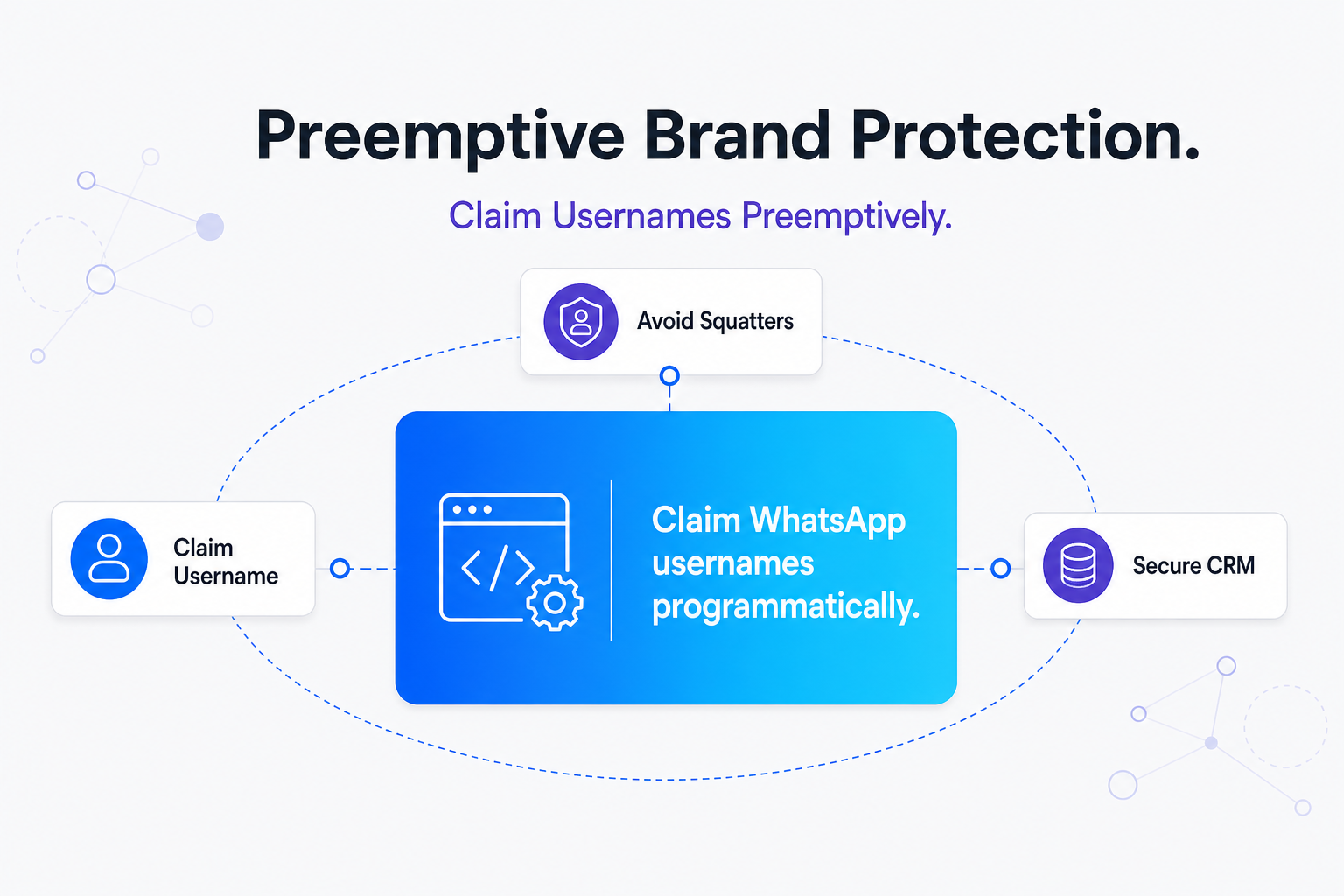
Claim your WhatsApp username today, or defend your hijacked brand reputation tomorrow. As Meta rolls out unique business handles, brand safety has shifted from a marketing detail to a technical priority. This guide shows how to programmatically claim your handle and adapt your database to avoid integration breakage.
Why Meta Won't Automatically Protect Your Brand Handle
Your official trademark does not protect your brand handle automatically during Meta's global username release. Bad actors actively register lookalike business handles, forcing legitimate brand owners to act before their names are compromised.
Common misconception: "Meta will automatically protect and reserve my brand handle." This belief is a dangerous starting point because Meta's namespace operates on a first-come, first-served basis. India's July 2026 rollout halt proves impersonation risks are a national regulatory concern, showing that waiting for regional rollouts invites namespace squatting and brand impersonation that can take months of legal disputes to recover.
We've seen how e-commerce brands suffer when bad actors register lookalike usernames to redirect customer support to phishing sites. The official WhatsApp Business platform lacks any public directory or native username search, leaving customers unable to verify your brand without preemptive brand claiming. The Whapi.Cloud API Gateway bypasses these official search limits, offering over 3,000 active production clients full access to native features, including username checking and immediate handle reservation, directly through socket connections.
The Username Land Grab Has Started Globally
On June 29, 2026, Meta opened global reservation: the username land grab has begun. Do not wait for Meta's regional rollout; claim usernames programmatically via fast gateway APIs.
This global release introduces the 128-character unique alphanumeric Business-Scoped User ID (BSUID). Because these handles completely mask traditional 15-character phone numbers, your backend integrations will experience silent failure unless you adapt your CRM and Database Systems to map these alphanumeric identifiers. For a complete overview of how handles alter identity mapping, see the Help Desk article on WhatsApp usernames and BSUID.
Secure Your Handle Programmatically in Under Two Minutes
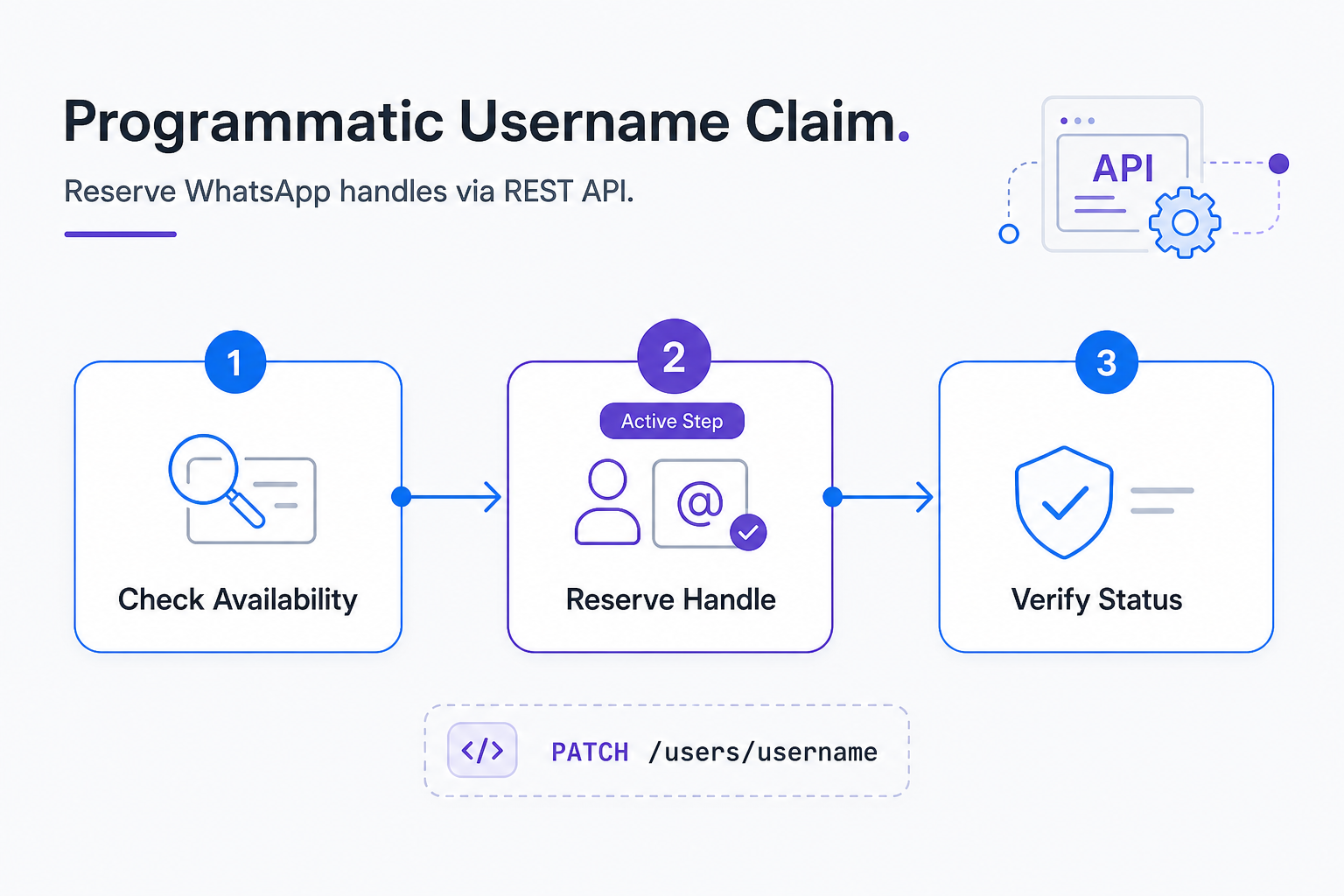
Reserving your business username programmatically requires only a single REST API call through Whapi.Cloud. This process bypasses Meta's complex corporate verifications, allowing developers to secure brand assets in production in less than two minutes.
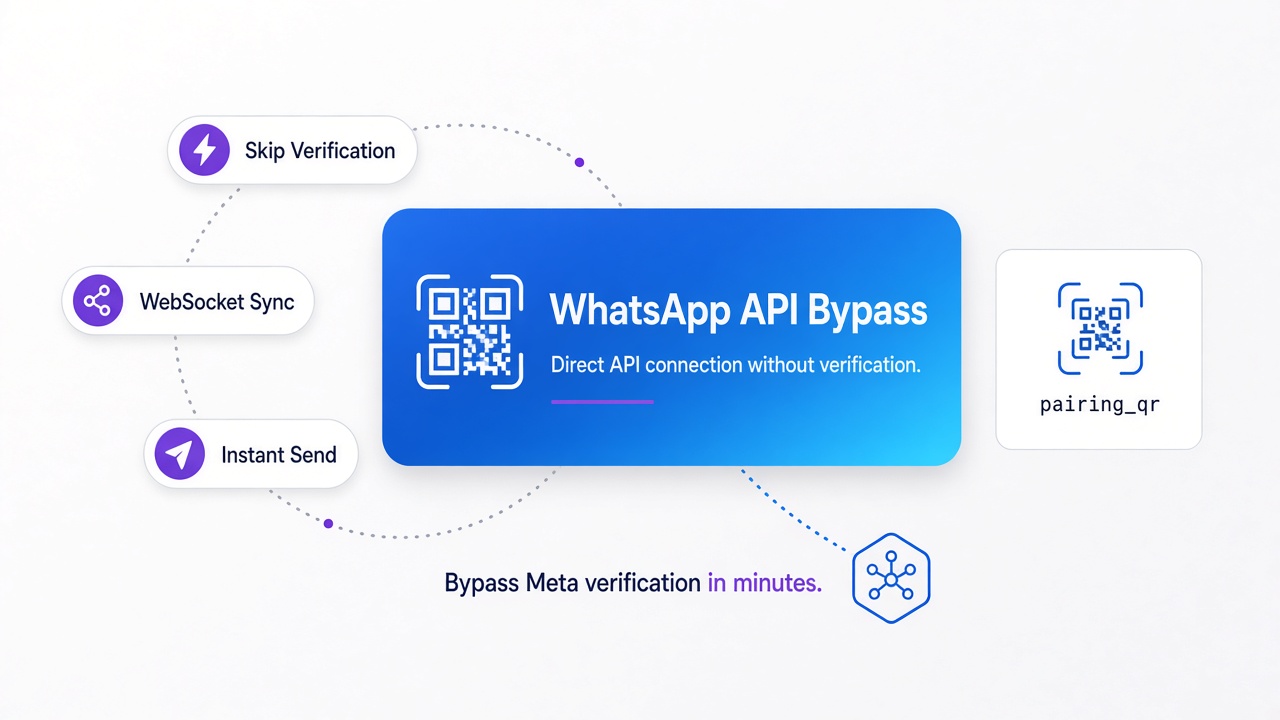
To implement the preemptive claim gate in your system, you do not need to wait for Meta Business Verification, which usually takes several business days. Whapi.Cloud connects via a web-session socket connection instantly by scanning a QR code, allowing you to bypass BSP gates. Once connected, `PATCH /users/username` reserves your handle; `GET /users/username` instantly verifies your reservation status directly against live WhatsApp protocol servers.
While competitive platforms like Green-API write about these changes and urge manual profile settings updates, Whapi.Cloud supports fully automated programmatic checking and reservation. This allows you to claim and verify handles across multiple channels without logging into separate browser dashboards. You can explore the full API reference to see all available methods.
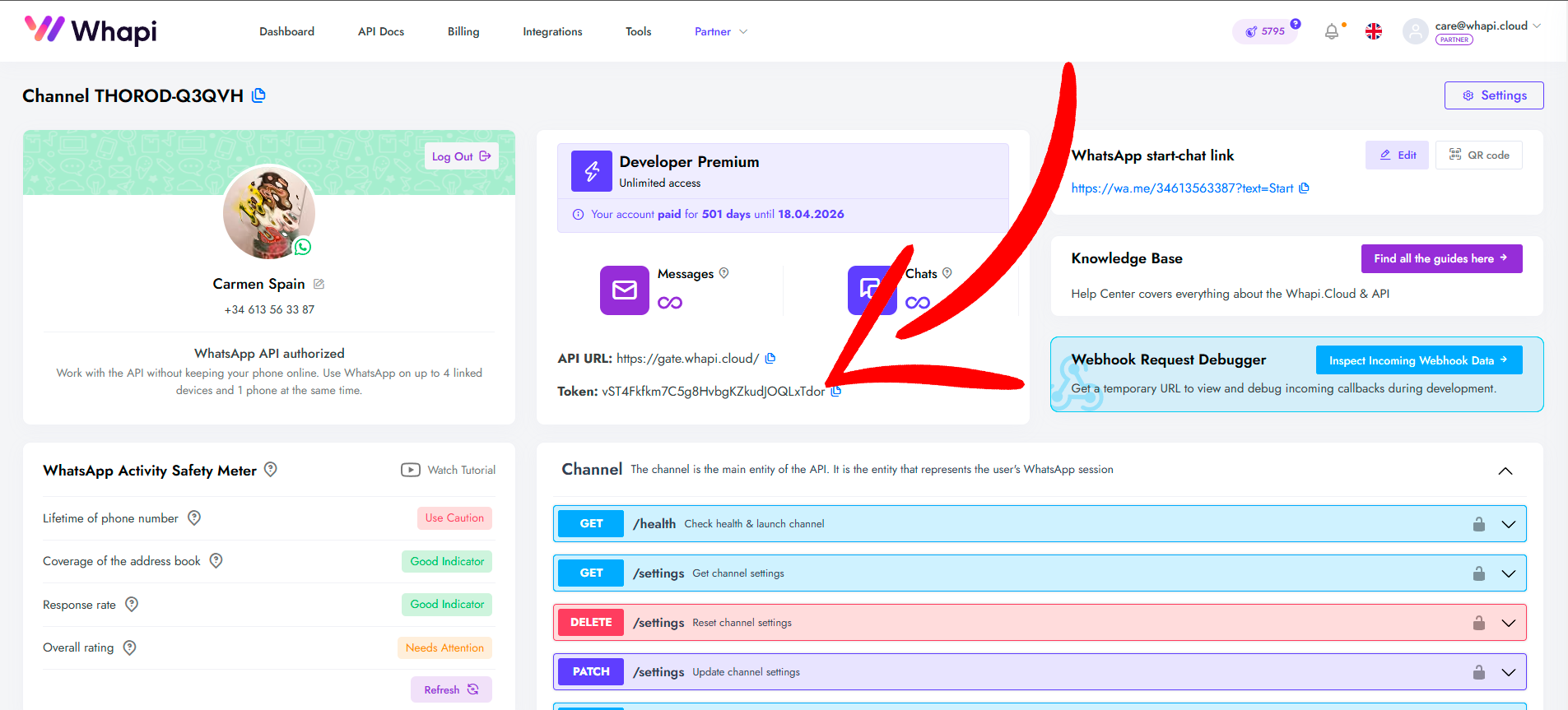
The following HTTP REST request demonstrates how to reserve your unique handle. You must include your permanent API token in the `Authorization` header and pass the desired alphanumeric string in the JSON payload.
// PATCH https://gate.whapi.cloud/users/username
const reserveUsername = async (desiredUsername) => {
  const response = await fetch('https://gate.whapi.cloud/users/username', {
    method: 'PATCH',
    headers: {
      'Authorization': `Bearer ${process.env.WHAPI_TOKEN}`,
      'Content-Type': 'application/json'
    },
    body: JSON.stringify({
      username: desiredUsername,
      reserve: true // without reserve: true here, the server attempts immediate activation which fails if the number does not match your business account profile
    })
  });

  if (response.status === 400) {
    // if the username is already taken or invalid, the API returns a 400 bad request
    throw new Error('Username reservation failed: handle is taken or formatted incorrectly');
  }

  const data = await response.json();
  return data;
};
After sending the reservation payload, you should immediately verify its registration state. By performing a GET request to `/users/username`, you retrieve the current active handle and confirm whether the server-side sync has finalized across Meta's infrastructure.
// GET https://gate.whapi.cloud/users/username
const checkUsernameStatus = async () => {
  const response = await fetch('https://gate.whapi.cloud/users/username', {
    method: 'GET',
    headers: {
      'Authorization': `Bearer ${process.env.WHAPI_TOKEN}`
    }
  });

  const { username, status } = await response.json();
  // if status is 'reserved', your handle is secure and protected from squatters
  return { username, status };
};
If you encounter unexpected 400 errors or timeout responses while attempting to claim your name, do not waste hours guessing the cause. Reach out to the Whapi.Cloud support team via the chat widget on whapi.cloud. The team actively helps developers resolve production issues and verify number readiness scores in real-time.
Database Migrations and CRM Fallback Mechanics
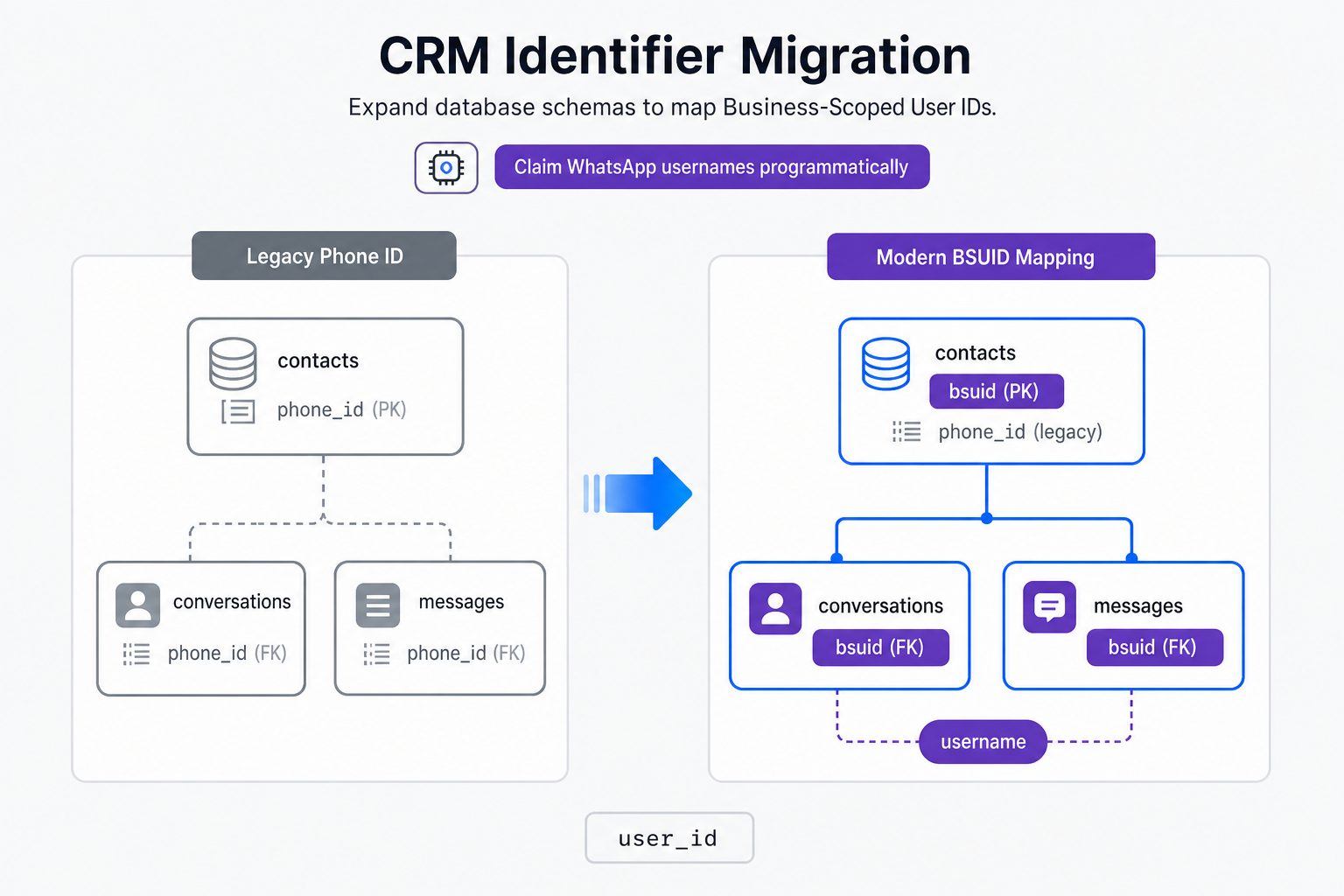
Replacing traditional phone numbers with hidden usernames structurally disrupts CRM data matching and user tracking. Developers must immediately migrate database schemas to support the new unique identifiers to prevent production integrations from breaking completely. When planning this transition, refer to our WhatsApp CRM integration decision framework for structured data synchronization.
To avoid systemic failures, look at how industry leaders adapted to the username shift: Zendesk migrated from phone keys to BSUID mappings to keep support workflows active when users started shielding their numbers. Instead of storing a standard 15-character phone string, your relational tables must expand to store 128-character unique alphanumeric identifiers. This means replacing or supplementing your database primary keys to map both types of inputs.
| Identifier Type | Legacy Database Format | New BSUID Database Format | System Integration Action |
|---|---|---|---|
| User Phone ID | VARCHAR(15) (e.g., wa_id) | VARCHAR(15) (Nullable) | Supplement with unique index to avoid CRM duplicates |
| WhatsApp Username | Not Supported / Null | VARCHAR(32) (e.g., @brand_handle) | Map as index for fast lookups in chats |
| Business-Scoped User ID | Not Supported | VARCHAR(128) (e.g., user_id) | Set as primary or secondary key for routing |
When users with hidden phone numbers initiate contact, Meta webhooks starting April 2026 (Webhook user_id parameter) omit the `wa_id` entirely, delivering only the 128-character `user_id`. You can review the exact JSON structure in the webhook format reference. When traditional phone IDs disappear, `REQUEST_CONTACT_INFO` buttons prompt users for phone numbers when hidden handles break your CRM. If your backend detects a webhook containing only a BSUID without a phone number, your system should immediately trigger this interactive button to prompt the customer for their details, executing CRM data matching and identifier syncing after retrieval.
Developer Warning: Relying on Legacy Open-Source Libraries
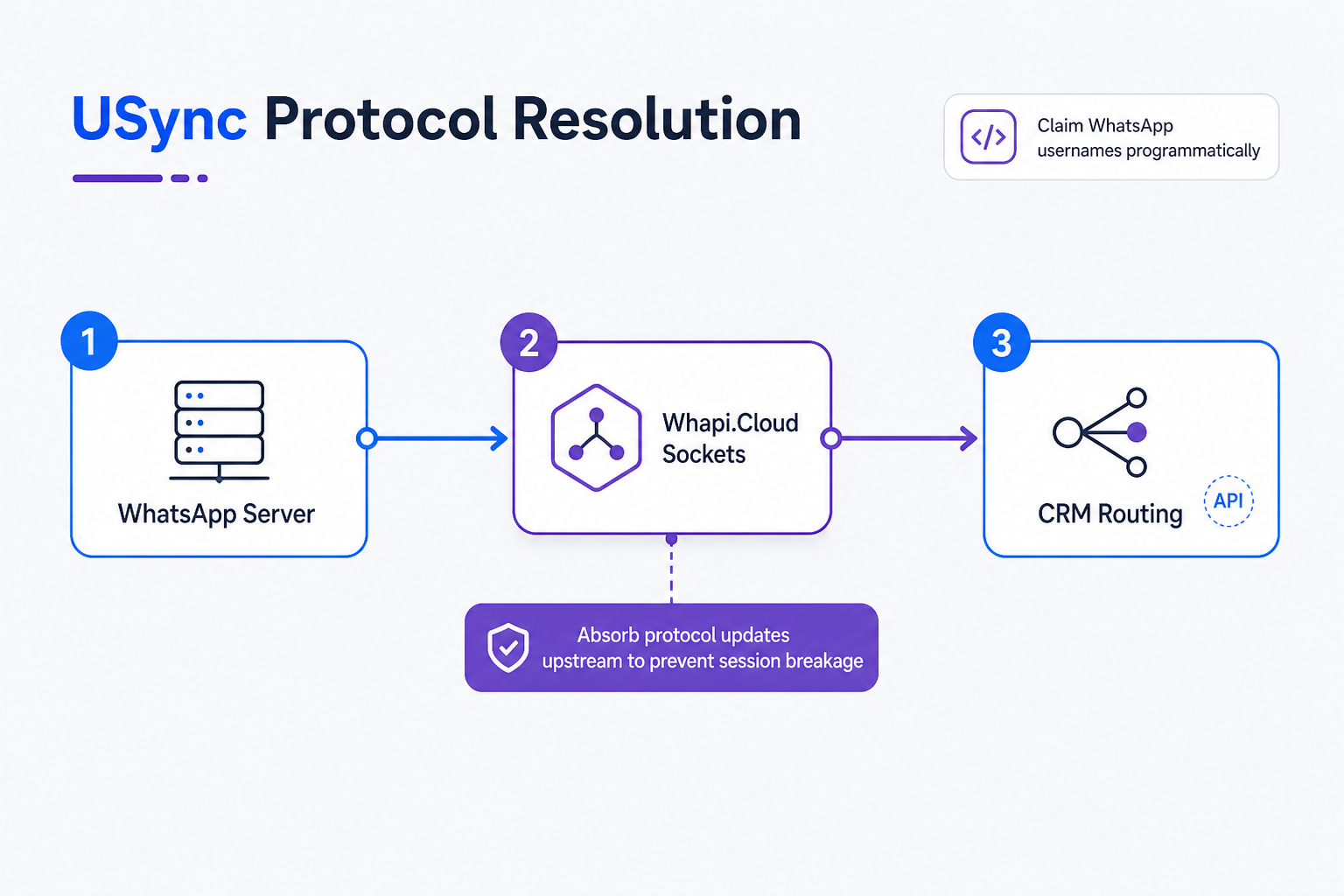
Relying on old libraries breaks session routing when phone identifiers are omitted from webhooks. Developers must verify that their messaging layers actively implement Meta's latest USync username protocol updates to avoid complete message delivery failure.
The pattern we encounter most often during major WhatsApp protocol shifts is that raw socket connections stop routing messages correctly due to binary format changes. Popular community libraries like WhiskeySockets Baileys were forced to release a major pull request to implement USync username protocol updates, adding username parsing directly to binary sockets. If your application relies on raw open-source libraries, you are personally responsible for monitoring these protocol updates, spinning up proxy farms, and patching constant breakage. If you are building on a JavaScript stack, you can follow our step-by-step Node.js WhatsApp bot tutorial to build a stable integration.
An upstream managed gateway provides essential stability during these protocol shifts. Whapi.Cloud absorbs all WhatsApp protocol shifts upstream in its core socket layers, meaning your external webhook format remains completely unaffected and stable. By delegating protocol translation to a managed service, your engineering team saves dozens of hours of maintenance overhead and avoids the operational risks of sudden, unannounced Meta updates. To maintain channel safety and prevent unexpected suspensions, developers should consult Whapi.Cloud's guide to avoiding account bans.
Rapid Adaptation Is the Ultimate Brand Trust Signal
Securing your brand handle programmatically before Meta's regional rollout represents a critical brand security measure. Fast-evolving gateway integration protects brand names faster than slow official corporate channels allow, giving your business an immediate trust advantage.
Do not expose your company to namespace squatting and brand hijack risks. Claim your WhatsApp Business username programmatically today and ensure database readiness for BSUIDs by scanning a simple connection QR code at panel.whapi.cloud/register.
Secure Your WhatsApp Brand Today
Do not let squatters claim your username. Set up Whapi.Cloud in minutes, connect via QR code, and programmatically secure your brand handle.