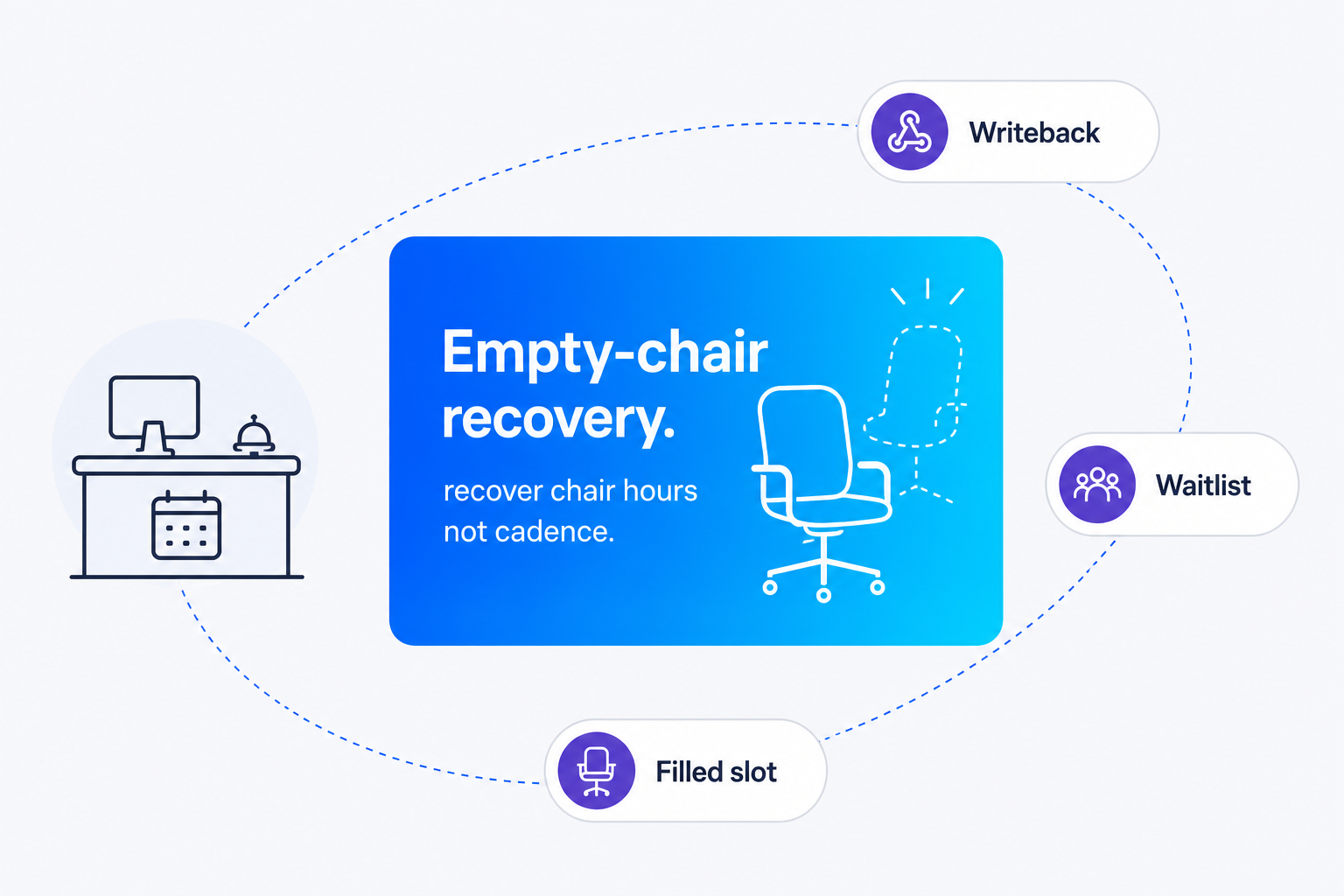
TL;DR: Wire confirm, reschedule, and cancel buttons into the live PMS, then offer cancelled slots to the waitlist before the appointment time. Empty-chair recovery is writeback plus waitlist fill, not cadence. Run a two-week sample on a free plan, one chair, and count recovered hours.
Clinic owners and integrators try a two-way WhatsApp API reminder case on a free plan and measure recovered chair-hours. One-way T-24h reminders still leak booked doctor-hours.
Reception already spends hours calling to confirm. Half do not pick up. The rest confirm and still no-show, while the slot stays marked booked so waitlist patients cannot take it. Treating a sent reminder as a recovered doctor-hour is the first mistake. The hour is recovered when the calendar changes and someone else sits down.
What a no-show actually costs
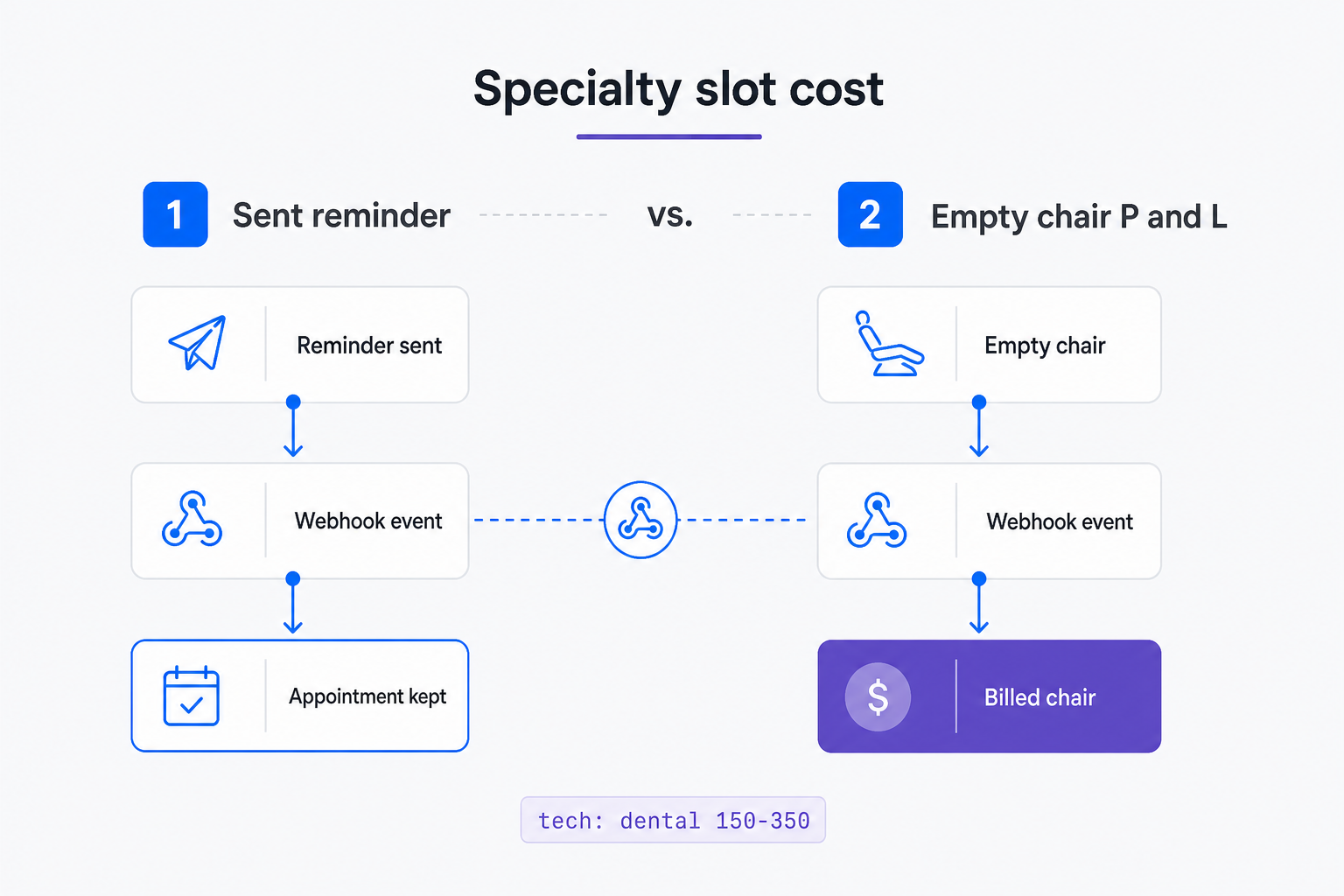
A sent WhatsApp tick leaves the chair billed. The calendar still shows booked.
We've seen reception teams treat a delivered T-24h tick as a recovered hour, then watch the chair sit empty at 10:00. Dantas (2018) put average healthcare no-show near 23%. Open-rate of the ping does not pay the dentist.
Name the loop empty-chair recovery: write the patient reply back into the live calendar, then fill the freed slot before the appointment time. One daily dental no-show in the $150--$350 billed band is about $39k--$91k per year once 1.4--1.8× overhead is counted. Dermatology and GP rows in the table show the same pattern at different slot prices.
| Specialty | Empty-chair range | What operators actually lose |
|---|---|---|
| Dental visit | $150--$350 billed; 1.4--1.8× true cost; $150--$300/hour overhead | One daily no-show ≈ $39k--$91k/year |
| Dermatology consult | $150--$200; literature nonattendance 7.8--31% | Procedure slots still need a late touch after the first confirm |
| GP panel | 20 visits/day at $150; 7% no-show | ≈ $55k/year per FTE from a small rate |
A 2013 dental-practice reminder study covering 1.6 million of 21.5 million appointments (email, SMS, and voice) reported about a 23% relative drop in no-shows. Cochrane SMS-versus-none work found a risk ratio of 1.14 for attendance. WhatsApp RCTs are mixed: one Brazil trial reached p=0.032; Mexico and India trials did not. Treat the blocked hour as the unit you recover.
Why one-way reminders still leak doctor-hours
You might try one-way T-24h blasts from a staff personal number first. Here is exactly how that breaks.
Projects that skip writeback tend to keep calling after the WhatsApp ping, because the board still looks full. The patient says yes on a call, or ignores the ping, and still does not come. The slot stays marked booked, so the waitlist cannot take it.
Use two-way writeback plus waitlist, not one-way T-24h blasts from a staff phone. A staff thread also dies when that person leaves. Nothing in the PMS changes when the patient types "can't come" into a private chat.
A vendor-authored Indore 12-clinic cohort (disclosed commercial interest; vendor write-up, no randomization) followed 12 providers and 8,400+ appointments from June to December 2024. Average no-show moved from 31% to 10% after WhatsApp reminders with interactive confirm and reschedule. Treat those figures as a commercial case.
| Approach | No-show effect | Fill-time | Staff minutes | Bot required |
|---|---|---|---|---|
| One-way T-24h | Ignore or phone-cancel leaves the hour blocked; leakage stays in the ~30% band | None. Waitlist never sees a free slot | Front desk still calling; many confirms still no-show | No |
| Two-way T-24h + T-2h + writeback | Confirm / reschedule / cancel lands in the PMS; contradictory T-2h stops | Slot frees on the board. Nobody is offered it yet | Calling drops for patients who already tapped Confirm | No. Three YES/NO-style buttons |
| Two-way + waitlist | Same writeback, then a replacement patient can sit down | Vendor claim: under 3 minutes. Engineering pattern: 15-minute YES/NO cascade. No independent 2--4 clinician study | Lowest idle-chair time if the cascade actually fires | No |
One-way reminder blasts with no reply path also look like bulk outreach to WhatsApp's server-side spam checks. Interactive confirm and reschedule give the thread a reply. Keep volume ramps gradual on a newly connected number. Over 3,000 active clients use Whapi.Cloud in production daily; the safe pattern is a real conversation with a reply path. Follow Whapi.Cloud's guide to avoiding account bans when you connect a clinic number.
The working cadence for confirmation, T-24h, and T-2h
Booking confirmation, T-24h, and T-2h are table stakes. Each touch has one job. Skip any touch whose job is already done.
The booking message captures consent and stores a reply path. T-24h still has hours to fill a cancel. T-2h catches people who never tapped Confirm. If T-24h already confirmed, do not fire T-2h. Same-day bookings skip T-24h. New visits and procedure slots keep both timed touches. Follow-ups that confirmed at booking can run T-2h only.
Native PMS reminders are often email or SMS. WhatsApp sits as an add-on webhook on top of that calendar. The clock lives in your job queue. Status-guard every send.
When the 24h and 2h cadence fails
Cadence fails when T-2h fires after the appointment already moved.
In practice, teams that skip the status guard send T-2h for a slot that already moved at 09:15. The patient rescheduled in the morning. The T-2h job was queued yesterday against 10:00. At 08:00 the ping still goes out with the old time. Send only while status is still scheduled.
WhatsApp has no native calendar-invite type, so your queue owns the clock. Phone trees make no-showing easier than rescheduling. The T-24h buttons have to be easier than that tree, or people ignore both and the hygienist sits idle 60--90 minutes after a same-day cancel.
Two-way confirmations without standing up a patient bot
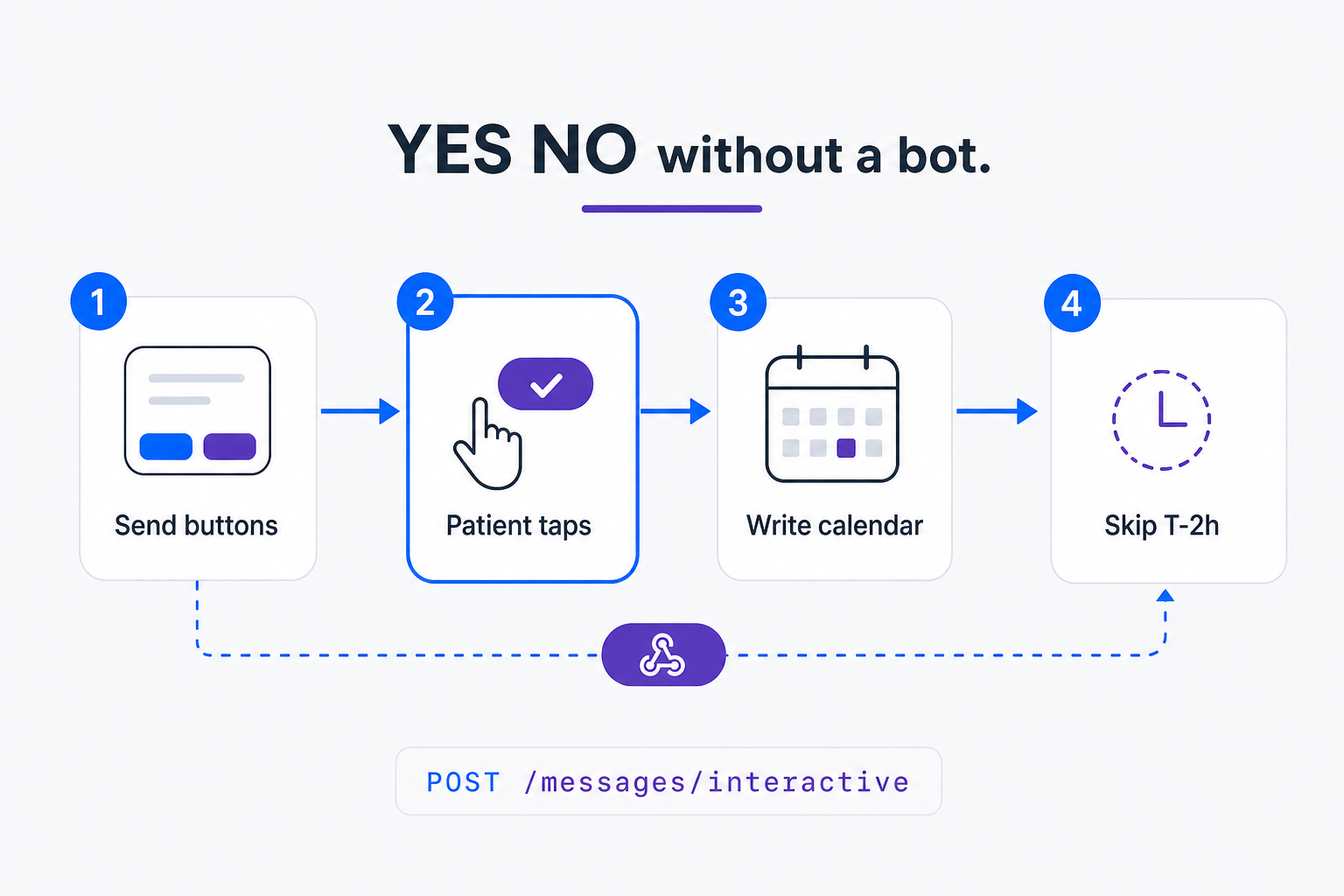
YES/NO replies confirm or free the slot without a chatbot. Three buttons are enough. A patient bot is extra product you do not need.
We will not cover standing up a patient chatbot, replacing the PMS, or official WhatsApp onboarding. This guide stops at reminder, reply, writeback, and waitlist.
Send date, time, and clinic name. Never send diagnoses or charts. There is no BAA path for WhatsApp products. End-to-end encryption does not equal a HIPAA program. Keep PHI in the chart. Put only the visit logistics in the ping.
POST https://gate.whapi.cloud/messages/interactive with required fields to (phone or Chat ID), type (button), body (object with text), and action (with buttons). Each button uses type: quick_reply, a title, and an id. WhatsApp allows up to three. Map ids to confirm:{appointmentId}, reschedule:{appointmentId}, and cancel:{appointmentId}. Button delivery depends on WhatsApp client updates; check the current button status notes before you assume every handset will render them. Fallback is POST /messages/text with required to and body (string), then parse YES / NO / CANCEL in the inbound webhook. The copy-paste shape is in Whapi.Cloud's send message with buttons how-to.
Capture consent before the first outbound. The booking confirmation is the right moment. Store the opt-in against the patient record. Keep it out of the message body.
// POST https://gate.whapi.cloud/messages/interactive
const res = await fetch('https://gate.whapi.cloud/messages/interactive', {
  method: 'POST',
  headers: {
    Authorization: `Bearer ${process.env.WHAPI_TOKEN}`,
    'Content-Type': 'application/json'
  },
  body: JSON.stringify({
    to: patientChatId,
    type: 'button',
    body: { text: 'Tue 19 Aug, 10:00, North Clinic. Confirm, reschedule, or cancel.' },
    action: {
      buttons: [
        { type: 'quick_reply', title: 'Confirm', id: 'confirm:' + appointmentId },
        { type: 'quick_reply', title: 'Reschedule', id: 'reschedule:' + appointmentId },
        { type: 'quick_reply', title: 'Cancel', id: 'cancel:' + appointmentId }
      ]
    }
  })
});
// if you skip the status === scheduled guard before this POST, T-2h still fires after a 09:15 reschedule and the patient gets two times
| Visit type | Booking confirm | T-24h | T-2h |
|---|---|---|---|
| New patient | Yes, with consent | Yes | Yes, unless T-24h already confirmed |
| Follow-up | Yes | Optional if already confirmed | Yes |
| Procedure | Yes | Yes | Yes. High slot cost |
| Same-day | Yes | Skip | Yes, if there is still time to fill |
Suppressions: the reminders you must not send
Suppress reminders when confirmed, cancelled, or the patient opted out.
Do not send T-2h after a T-24h Confirm. Do not send any touch when status is no longer scheduled. Stop outbound after opt-out. Deduplicate with an idempotency key of appointment_id plus touch name so a retried job does not double-ping.
A cancelled booking that still receives T-2h is how clinics teach patients to ignore the number. Guard the job. Then delete the queued touches when writeback lands.
Filled slots recover the hour that reminders only free
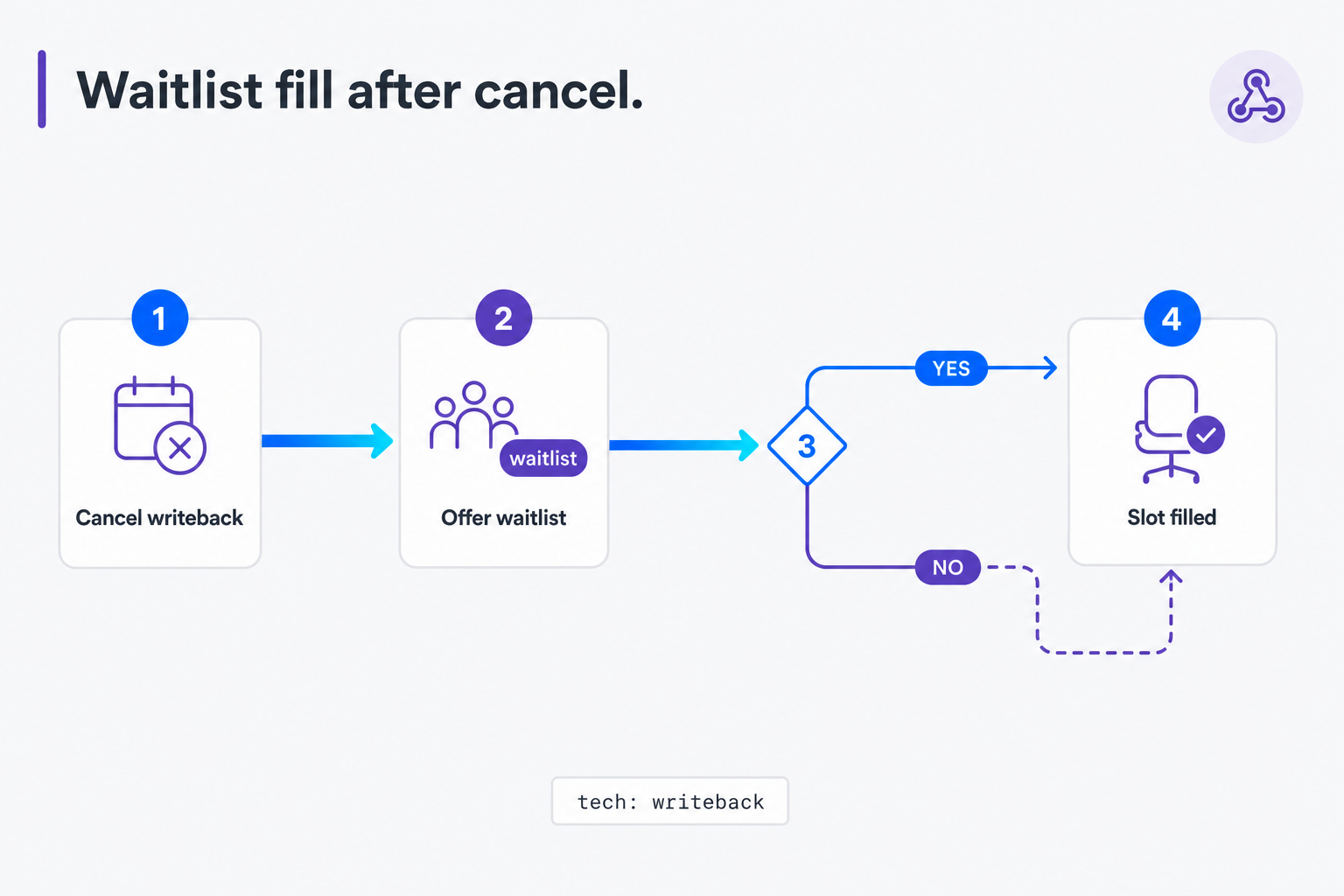
After cancel writeback, offer the freed slot to the waitlist. A reminder that frees the hour still leaves it idle until someone sits down.
A same-day cancellation leaves the hygienist idle. Without a waitlist backfill the chair dies for 60--90 minutes. Vendor materials claim waitlist backfill under 3 minutes. A common engineering pattern is a 15-minute YES/NO cascade down the waitlist pool. There is no independent fill-time measurement in a 2--4 clinician clinic, so treat those numbers as vendor and engineering ranges.
Write cancel or reschedule into the PMS first. Then select the next waitlist patient who fits the slot (visit type, provider, duration). Send the same interactive shape: take the slot, or pass. If they pass, move to the next name inside the remaining window. Do not offer a slot that is still marked booked. That is how you double-book.
Score fill-time. No-show rate without fill-time is a vanity move: you cancelled the ghost and still paid the dentist to sit.
What your scheduler must emit (and what WhatsApp must write back)
Cancel without calendar writeback keeps the doctor-hour blocked. WhatsApp is the reply path. The PMS stays the system of record.
The pattern we encounter most often is a cancel reply that never reaches the calendar. Integrators should treat the contract as events in, status writeback out, idempotent jobs. Read the HTTP surface in the Whapi.Cloud API docs before you invent a second calendar.
- PMS emits
appointment.created,appointment.updated, andappointment.cancelledwith appointment id, patient phone, start time, visit type, and current status. WhatsApp does not replace the HMS. - Your job queue stores an idempotency key (
appointment_id+ touch name) and fires T-24h / T-2h only while status isscheduled. - POST
/messages/interactive(or POST/messages/textfallback) from the connected clinic number. - PATCH
https://gate.whapi.cloud/settingswith awebhooksarray. Each item needsurl. Seteventsfrom GET/settings/eventsrather than guessing names. POST/settings/webhook_testwith requiredtype,url, andmodebefore the first live reminder. - On inbound message, map button
idor YES/NO/CANCEL text to confirm, reschedule, or cancel. Ignore duplicates of the sameid. - Write that state back to the PMS. Delete or complete the queued T-2h job when Confirm lands.
- If the writeback is cancel, start the waitlist offer before appointment time. If it is reschedule, emit a new
appointment.createdand schedule a fresh pair of touches.
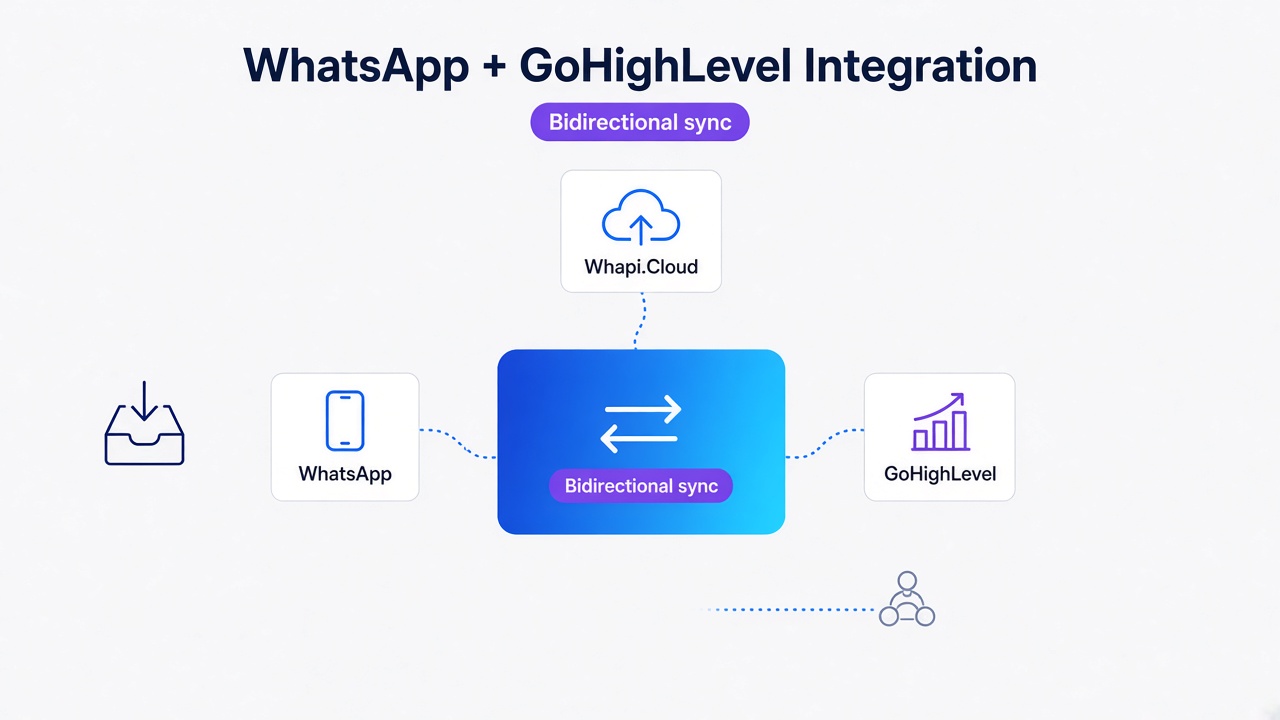
If you do not want a custom listener, Whapi.Cloud's native Make and n8n connectors subscribe to the same inbound webhook and patch the PMS. The contract does not change. A retried webhook without an idempotency key is how waitlist patients get double-booked.
Can you send reminders from the clinic number patients already have?
Send reminders from the WhatsApp number patients already save. A new sender looks like a stranger.
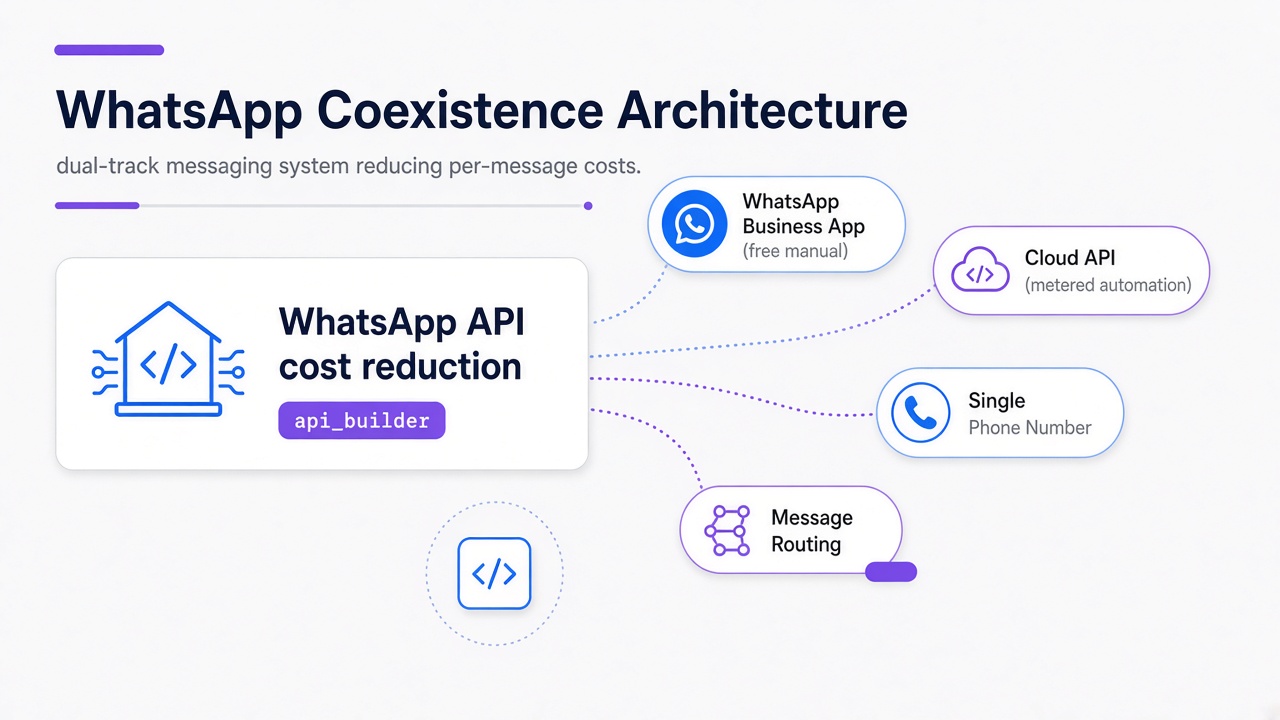
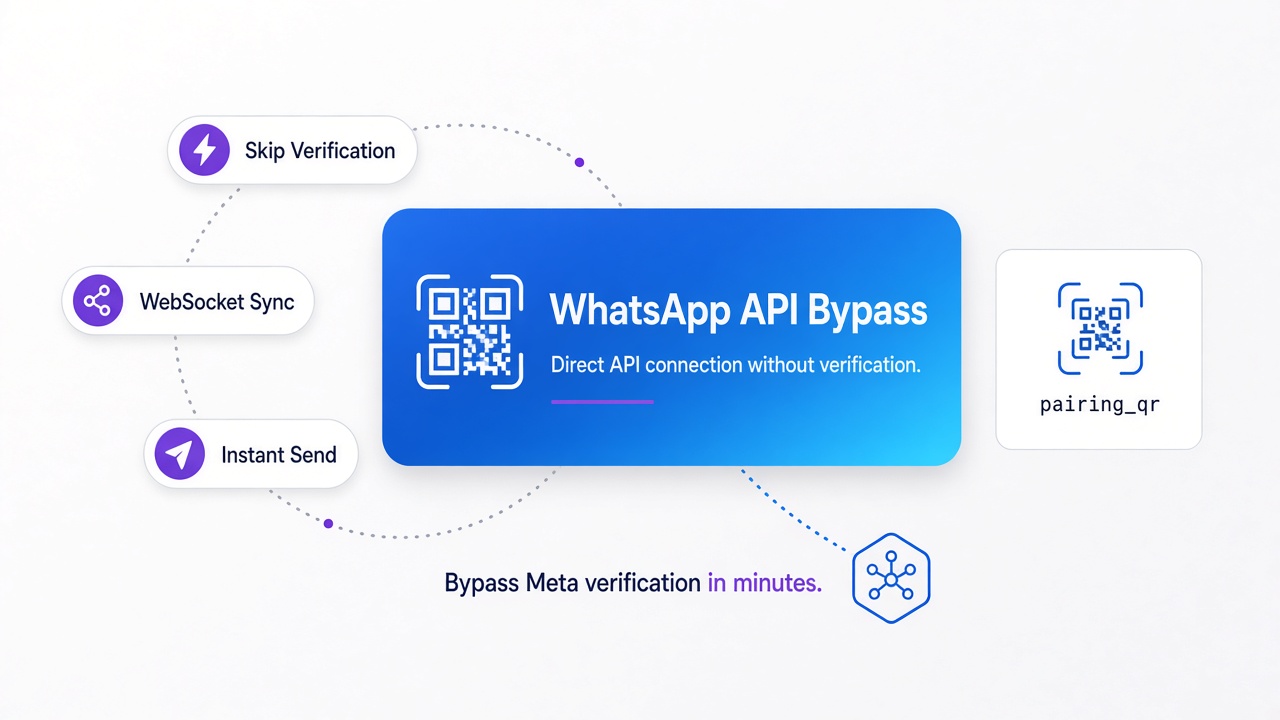
Reception's personal phone is the rejected path: the thread dies when that staff member leaves, and nothing writes back. In the official WhatsApp Business API, a WABA sender is a new business number that needs approved outbound templates. In Whapi.Cloud, you scan a QR code and attach the clinic number patients already have saved, because the gateway uses web-session sockets on that existing WhatsApp account.
The free plan is enough to try the scan and a handful of interactive sends. Patients already have that number in contacts. Keep the phone app and the API on the same line so reception still sees the thread.
What reminder volume actually costs
Empty-chair P&L dwarfs reminder-volume cost on every specialty slot.
Count messages so finance is not surprised. Score recovered hours on the board. Figures below are illustrative.
| Daily bookings | Touches | Msgs / 22 days | Official utility (illustrative) | Flat per-number |
|---|---|---|---|---|
| 10 | 2 | 440 | ≈ $1.76 | Subscription / number / month |
| 30 | 2 | 1,320 | ≈ $5.28 | Subscription / number / month |
| 30 | 3 | 1,980 | ≈ $7.92 | Subscription / number / month |
In the official WhatsApp Business API, US utility is billed per conversation (illustrative $0.004/msg). In Whapi.Cloud, a flat rate per connected number per month means reminder volume does not add a per-conversation line.
Run a two-week pilot that can falsify the vendor no-show story
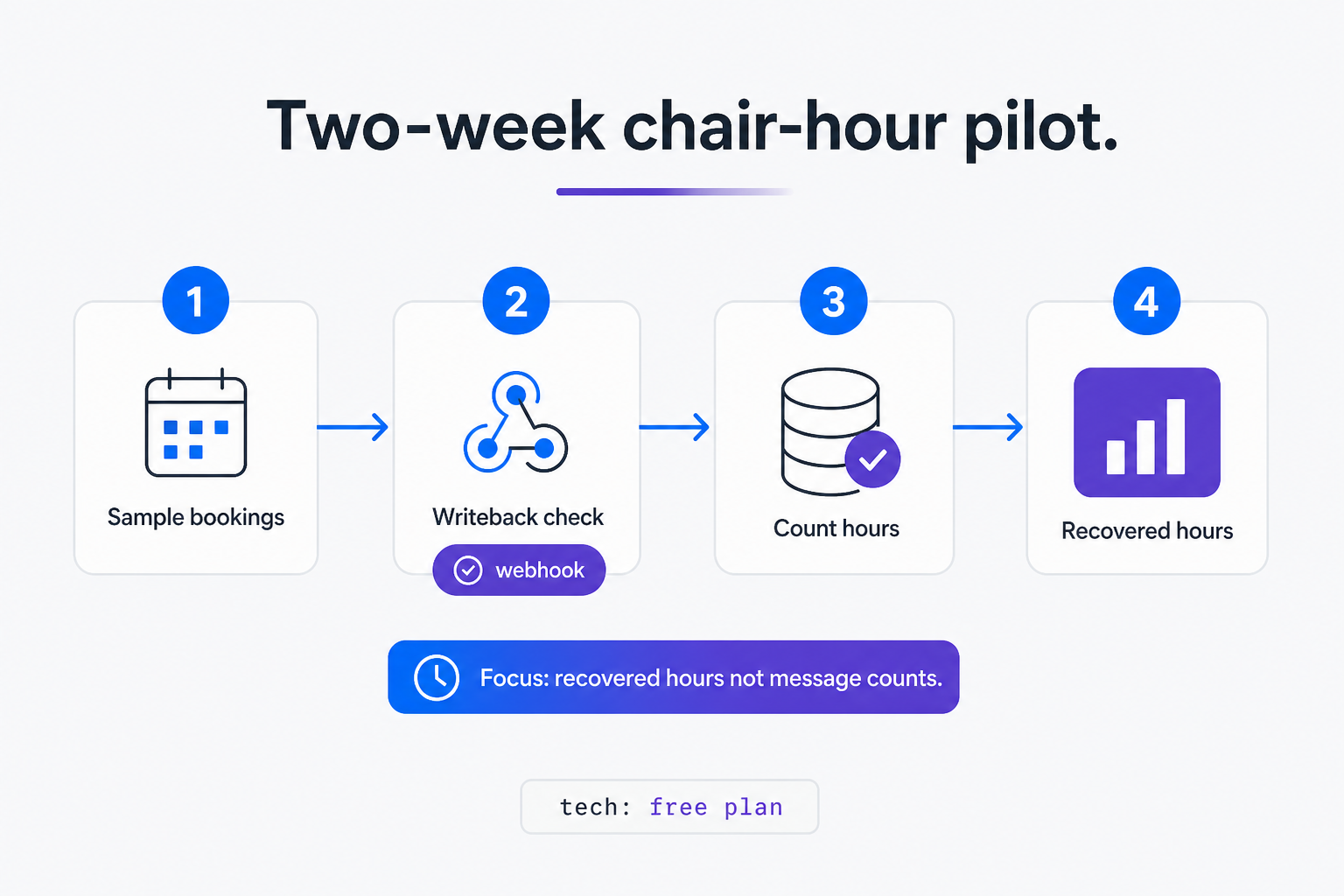
A two-week pilot tracks recovered chair-hours. Message counts do not decide the case.
The vendor 31-to-10 band came from six months and 8,400+ appointments. Two weeks on one chair will not reproduce that curve. Two weeks will falsify the plumbing: did confirm, reschedule, and cancel write back, and did a freed slot get offered in time? Scan the QR on the clinic number and run the loop on a small booked sample. Sandbox is forever free with 5 active conversations per month and 150 messages per day. That is a one-chair proof. A 30-booking-a-day load test needs a paid number.
Score the sample on recovered chair-hours. For every cancelled or rescheduled booking, record whether writeback landed, whether a waitlist offer went out before the original start time, and whether someone sat down. Compare no-show rate to the prior two weeks, but treat a handful-of-days swing as noise. Keep front-desk call minutes as a secondary line.
Clinic owners and integrators who try this WhatsApp API case on a free plan should leave with recovered chair-hours on a small sample, or a clear fail if writeback never landed. One-way T-24h still leaks the hour. Empty-chair recovery is buttons, calendar writeback, and waitlist fill. If the board still shows booked ghosts after WhatsApp cancels, stop adding touches and fix the writeback. Connect the clinic number, send three buttons, write the reply into the PMS, and offer the freed slot.