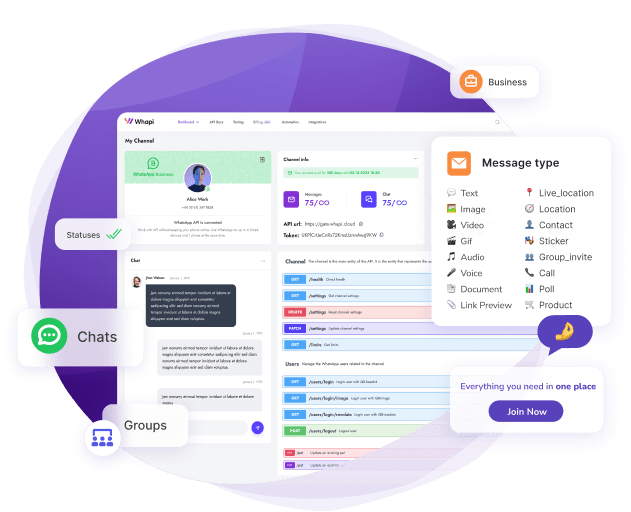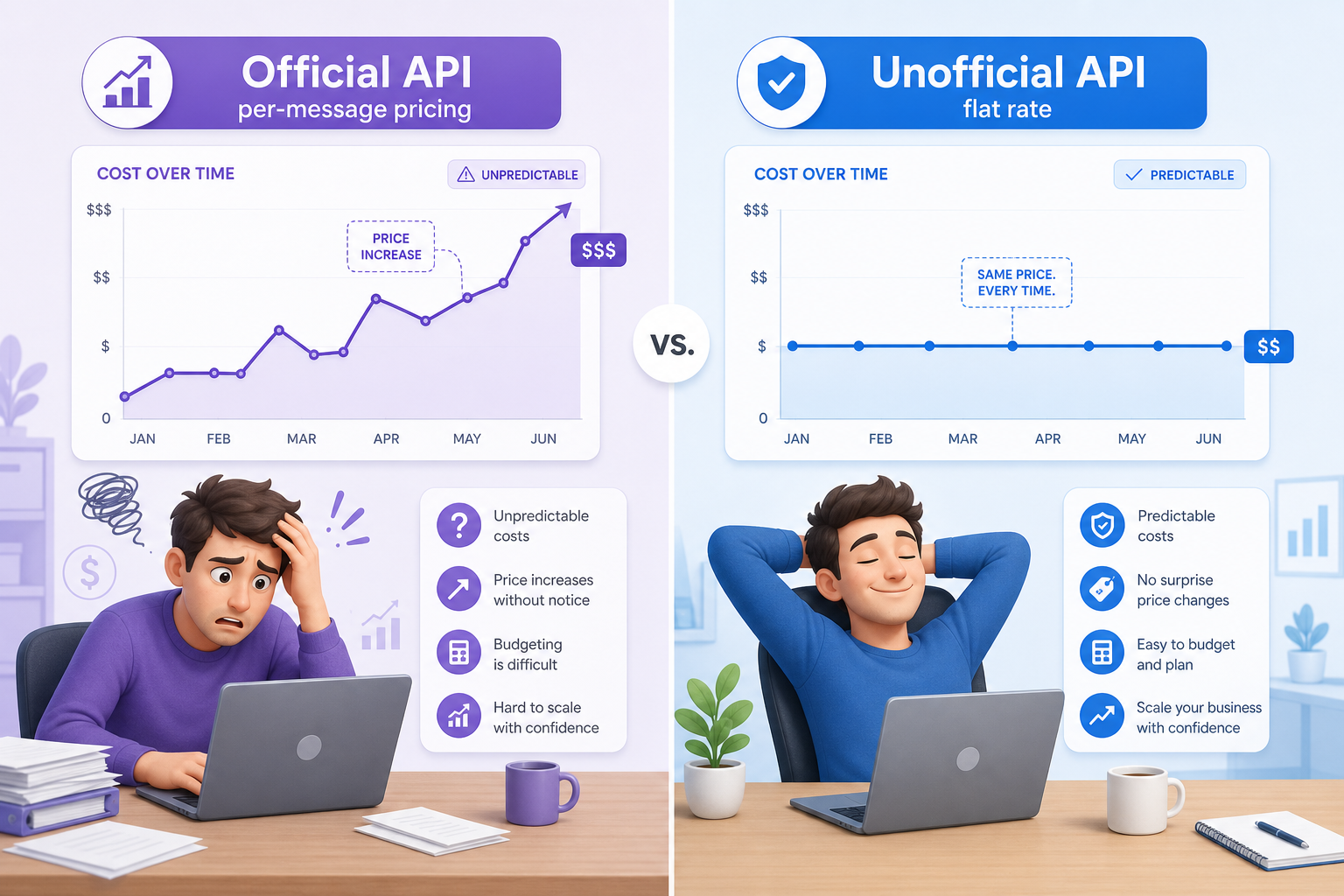
TL;DR: The official WhatsApp API charges per message, so your bill grows as your business succeeds. Small teams switch to flat-rate unofficial APIs like Whapi.Cloud and cut costs by up to 90%. You get instant setup via QR code instead of waiting days for Meta approval, plus access to groups, channels, and statuses that the official API blocks.
Most small business owners assume "official" means "better." When they need WhatsApp automation, they head straight to Meta's WhatsApp Business API expecting reliability and fair pricing. They discover something else: a billing model where success increases your costs, feature gates that require enterprise-scale volume, and approval workflows that drag on for weeks.
The better your WhatsApp strategy works, the poorer you become. This is the per-message pricing penalty built into Meta's official API. We've watched teams hit this wall during their first high-volume campaign. The moment engagement spikes is the moment their bill becomes unpredictable. Unofficial APIs flip this model. Flat subscription pricing means your budget stays predictable whether you send 500 or 50,000 messages.
The Per-Message Trap: Why Official API Pricing Punishes Growth
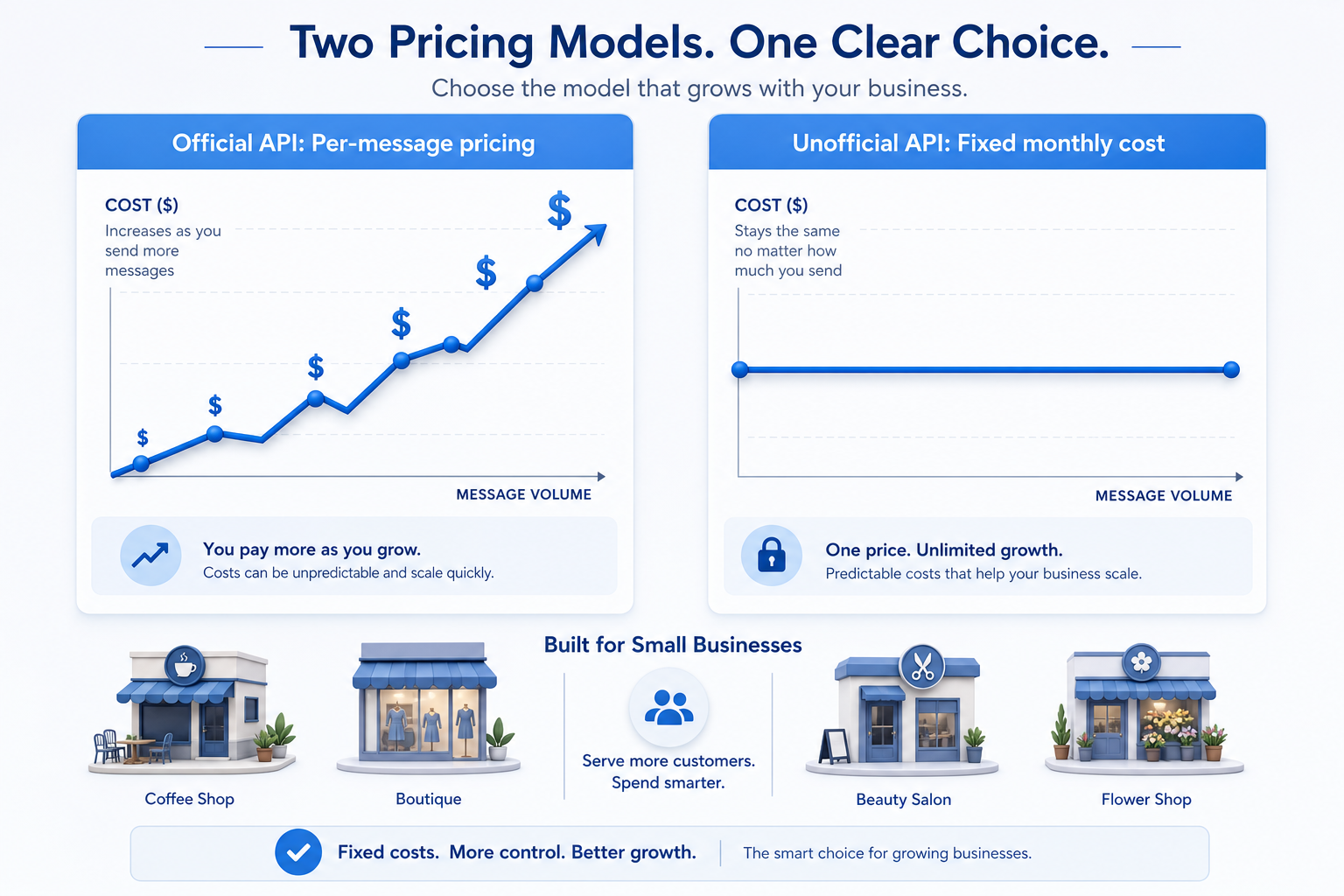
Meta's official WhatsApp Business API charges per delivered message. Pricing varies by country and message category (marketing messages cost more than utility messages), but the core mechanic is constant: every conversation adds to your bill. As one analysis from waslo.io notes, "the better your strategy works and the more conversations you generate, the higher your bill."
For a small restaurant processing 100 orders daily via WhatsApp, this adds up fast. At typical rates, that's hundreds of dollars monthly just for order confirmations and delivery updates. Add marketing broadcasts and customer support, and you're looking at thousands before you've paid your BSP markup.
BSPs add 12--35% on top of Meta's rates, plus monthly platform fees ranging from $50 to $500. What starts as "pay for what you use" becomes a complex cost structure where every customer interaction is metered. The 24-hour conversation window in the official API adds another constraint: outside this window, all outbound replies must use pre-approved templates and become billable events. Whapi.Cloud has no per-message fees and no template restrictions.
Feature Prisons: Groups, Channels, and Statuses Behind Enterprise Walls
Even if you accept unpredictable pricing, the official API restricts the WhatsApp features small businesses use daily. Groups are essential for community building, internal team coordination, and customer support. Yet Meta's group API requires businesses to send at least 100,000 company-initiated messages within 24 hours just to qualify. For most small teams, that's impossible.
And if you do qualify? Official API groups are limited to 8 participants maximum, compared to 1024 in regular WhatsApp. This isn't a technical limitation. It's enterprise gatekeeping that excludes small businesses from collaborative workflows they rely on.
The restrictions run deeper. WhatsApp Channels, the broadcast feature businesses use for marketing announcements, have no API access in the official platform. Statuses (WhatsApp Stories) are equally inaccessible programmatically. Official APIs remain "primarily focused on one-to-one messaging," while the features small businesses actually use stay locked away. Whapi.Cloud connects through web-session sockets, giving you full API access to groups, channels, statuses, and catalogs.
Setup Friction: 48 Hours of Approval vs. 48 Seconds to First Message
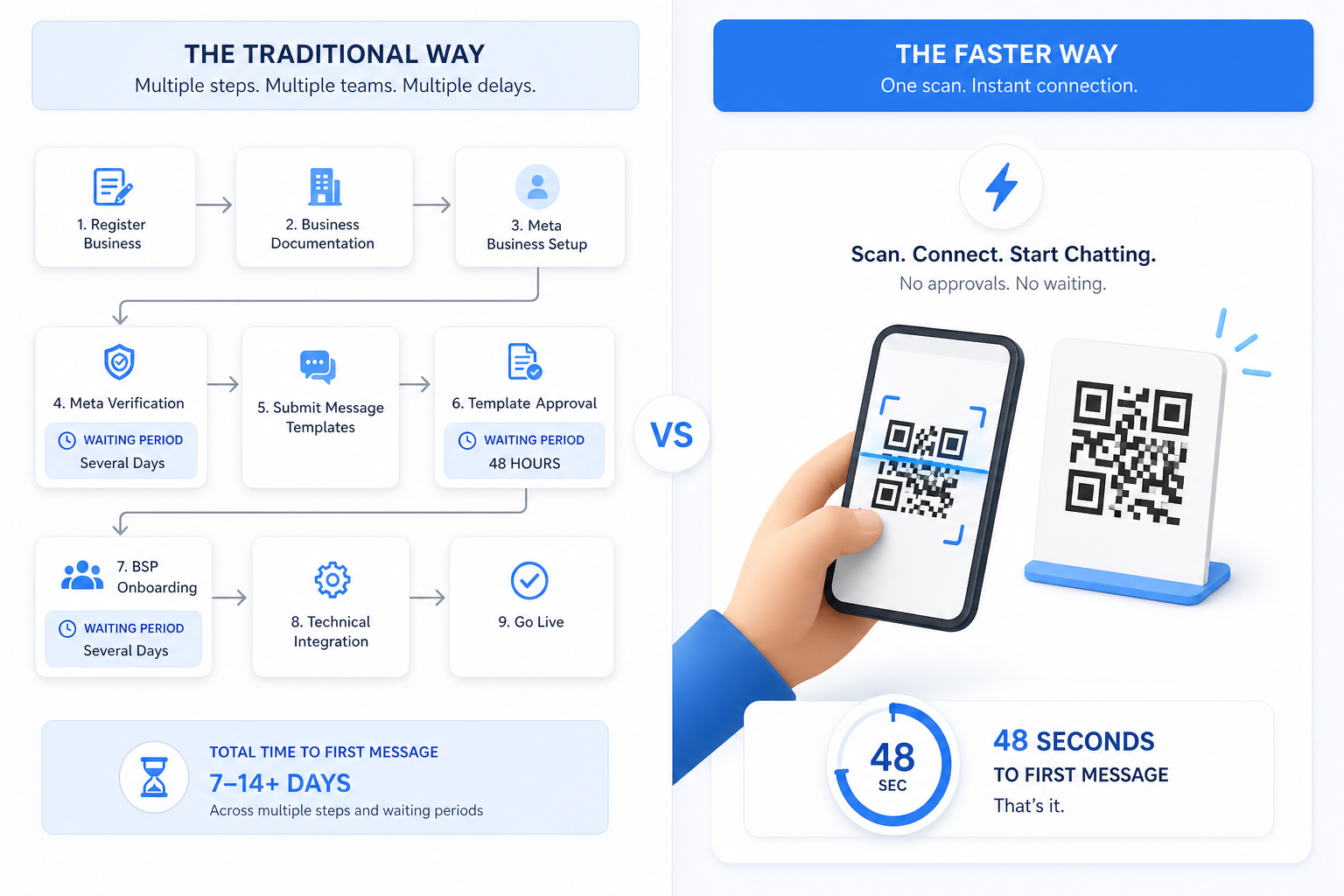
Before sending a single message through the official API, you must complete Meta Business Verification. This involves submitting business documentation, waiting for review, and often facing rejection. According to Meta's own developer community, "most rejections don't indicate a fake business but rather that Meta's reviewers cannot perfectly match submitted information across different sources." Mismatches between your business registration, website, and Facebook presence trigger delays.
Once verified, every message template requires pre-approval. Templates needing human review can take up to 48 hours, with rejections due to formatting errors, content violations, or miscategorization. You cannot simply message your customers. You must request permission for each message type first.
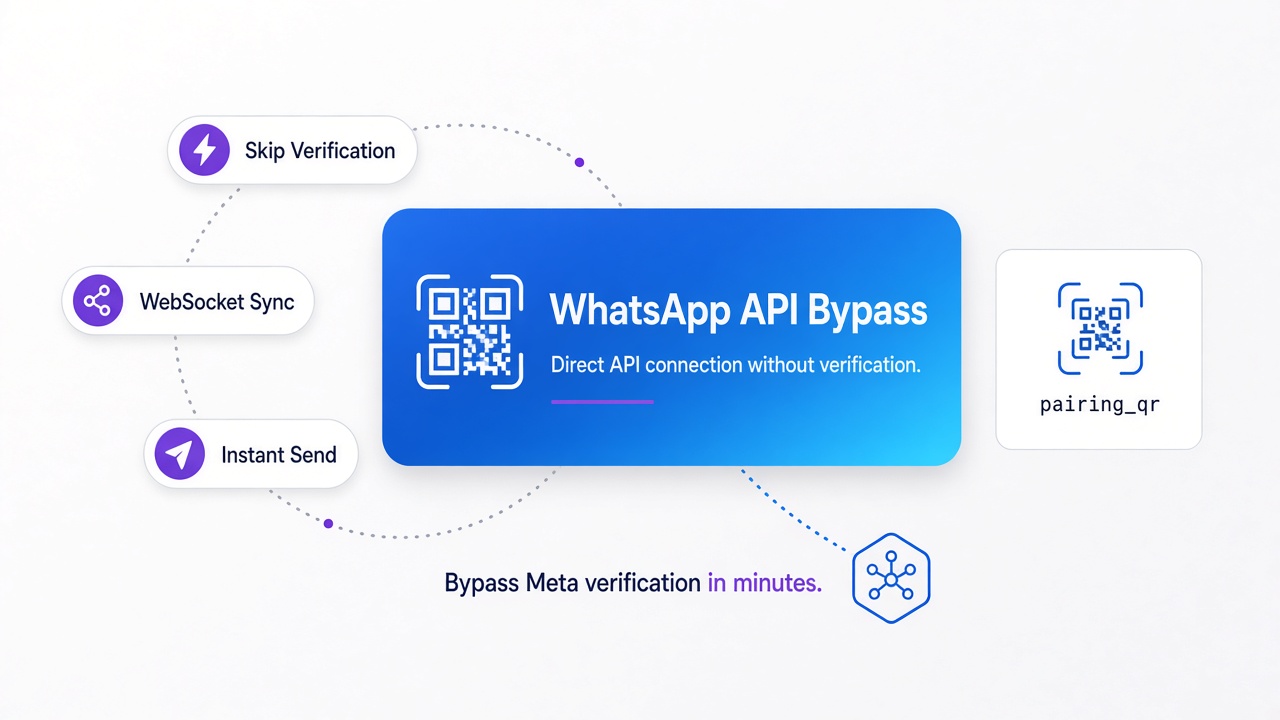
Unofficial APIs use QR-code onboarding. Scan the code with your WhatsApp app, and you're connected. In our experience helping teams migrate, the time from "I need WhatsApp automation" to "first API call sent" is often under a minute. No verification queues. No template delays. No documentation submissions. The technical term is "session-based authentication," but the practical result is instant access.
Proof from the Field: Real Businesses, Real Results
The evidence for unofficial API adoption isn't theoretical. It's documented across industries. Small businesses consistently achieve measurable ROI when they bypass official API limitations.
La Guitarrita, a Mexican restaurant, eliminated third-party delivery commission fees (typically 15--30%) by switching to direct WhatsApp ordering. The result: 267% growth in delivery orders and 178% increase in catering bookings. Per-message pricing would have made this transformation unprofitable. The volume of order confirmations alone would have generated unsustainable API costs.
Karachi Multi-Specialty Clinic automated appointment booking via WhatsApp and saved 30+ staff hours per week while reducing no-shows by 35%. Patient adoption reached 92% within the first month, delivering a 7:1 ROI. The clinic achieved this without enterprise-level messaging volume or complex template approvals. Capabilities the official API would have gated behind verification and pricing tiers.
Mountain Gate Realty in Dubai faced slow lead qualification through traditional marketing channels. After implementing WhatsApp automation, they achieved a 50% increase in response rate with 70% cost reduction compared to other channels. These aren't edge cases. They're the pattern we encounter most often: small teams need feature flexibility more than compliance guarantees, and unofficial APIs deliver exactly that.
What Whapi.Cloud Unlocks: The Full WhatsApp Stack
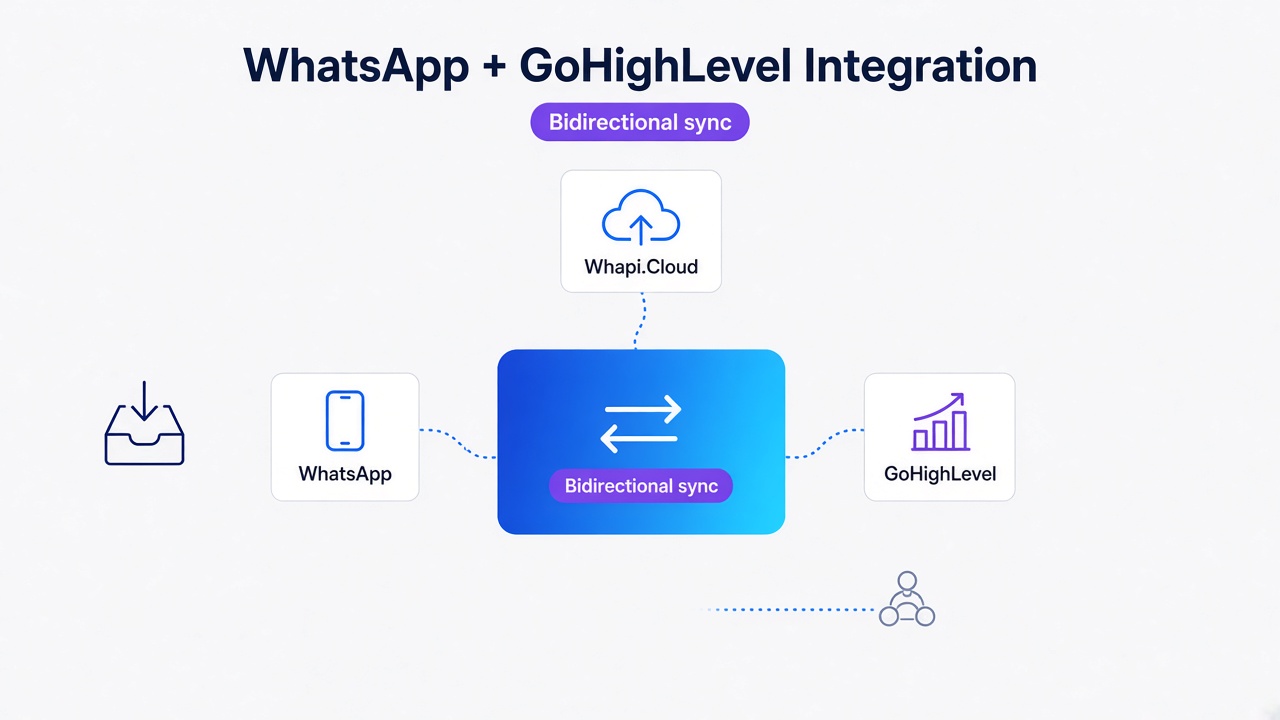
Whapi.Cloud is a WhatsApp API provider that connects through web-session sockets, the same mechanism WhatsApp Web uses. This connection method provides capabilities the official platform restricts or blocks entirely.
Flat subscription pricing replaces per-message costs. Whether you send 500 messages or 50,000, your monthly rate stays predictable. For high-volume scenarios, this delivers up to 90% cost reduction compared to official API bills.
Full feature access includes groups (up to 1024 participants), channels for broadcast messaging, statuses for story updates, and product catalogs for e-commerce. These aren't enterprise-tier add-ons. They're standard capabilities available immediately after QR-code onboarding.
Over 3,000 active clients across multiple countries use Whapi.Cloud in production daily. The infrastructure includes unique proxies, regional providers, and continuous WhatsApp version tracking. For teams concerned about safe operation, the knowledge base provides guides on maintaining healthy accounts.
When Does the Official API Make Sense?
The official WhatsApp Business API serves specific use cases well. If you require formal Meta compliance documentation for regulated industries, need WhatsApp Flows (native in-chat forms), or want official VoIP calling integration, the official platform is the right choice. Enterprise teams with dedicated compliance staff and predictable high-volume messaging budgets can absorb the per-message model.
For everyone else, the official API creates more problems than it solves. Small restaurants, clinics, real estate agencies, startups. You trade flexibility for compliance you don't need, pay per-message rates that punish engagement, and wait days for approvals while competitors launch immediately. The pattern we see: teams start with the official API, hit the cost or feature wall within months, then migrate to unofficial alternatives. The smarter play is starting where you'll end up anyway.
Unofficial APIs Unlock the Full WhatsApp Small Businesses Actually Use
Your customers don't use WhatsApp as a business messaging channel. They use it for groups, status updates, and direct conversations with businesses they trust. The official API restricts you to a stripped-down version of this experience, charging you more as you succeed.
Unofficial APIs remove these constraints. Flat pricing keeps budgets predictable. Instant onboarding gets you operational today. Full feature access lets you meet customers where they already are.
The better your WhatsApp strategy works, the more you save. This is the inversion that matters for small business. Instead of penalizing success with rising per-message bills, unofficial APIs reward growth with consistent, predictable costs. That's the WhatsApp API experience worth building on.